Soldering is an essential skill for electronics enthusiasts, repair technicians, hobbyists, and professionals alike. Whether you’re assembling intricate circuits, repairing gadgets, or learning the ropes of electronic fabrication, the process remains largely the same: heat your soldering iron, melt a bit of solder, and join components securely. While the satisfaction of creating a perfect solder joint is hard to beat, there’s a hidden hazard that often goes overlooked—soldering fumes.
Those curling wisps of smoke rising from the tip of your iron aren’t just an annoyance; they’re a cocktail of chemicals that can pose real risks to your health and comfort over time. Thankfully, you don’t need to compromise your well-being to pursue your passion. A simple, effective, and affordable solution comes in the form of a 12V DIY smoke absorber fan—a fume extraction system designed to keep your air clean and your workspace safe.

In this comprehensive guide, we will explore why soldering fumes are dangerous, how a smoke absorber works, the advantages of a 12V DIY solution, and how you can set up your own effective smoke extraction system. By the end, you’ll appreciate why investing in a smoke absorber isn’t just a luxury; it’s a necessity for anyone who wields a soldering iron.
## The Hidden Dangers of Soldering Fumes
Soldering seems harmless enough. A little whiff of fumes here, a few hours’ work there—what could go wrong? The reality is that every time you solder, you release a range of airborne contaminants:
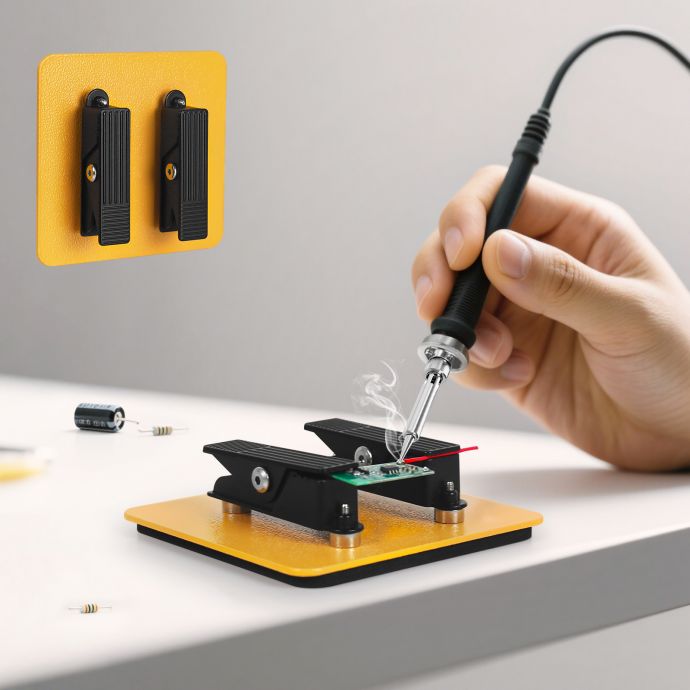
- **Rosin-Based Flux Fumes:** Most electronic solder contains rosin flux, which, when heated, produces fumes containing a variety of organic acids and aldehydes.
- **Metal Particulates:** Leaded solder (still common in hobbyist settings) releases fine particles of lead, while lead-free solder can emit tin and silver particles.
- **Volatile Compounds:** Soldering releases substances like formaldehyde, toluene, and other organic vapors, depending on the flux and solder alloy used.
Short-term exposure can cause watery eyes, headaches, or throat irritation. Over time, particularly in poorly vented spaces, you risk respiratory illnesses, skin sensitivity, or even more serious conditions like occupational asthma and heavy metal poisoning.
## Good Ventilation Isn’t Enough
A common misconception is that simple room ventilation—opening a window, running a ceiling fan, or using your HVAC system—will suffice to clear fumes. Unfortunately, this is rarely effective, especially if you solder regularly. Fumes rise directly from the soldering site, often rising into your breathing zone before dispersing. Moreover, many hobbyists and professionals work in basements, garages, or small workshops with limited airflow.
This is why targeted local extraction—removing fumes right at the source—is far more effective and reliable.

## The Principles of Fume Extraction
A solder fume extractor is a device designed to capture and filter smoke, vapors, and particulates at the workbench. It consists of:
1. **An Intake Fan:** Draws air away from the soldering area.

2. **A Filter, Typically Activated Carbon:** Traps contaminants and neutralizes odors.
3. **An Exhaust Outlet:** Releases cleaned air back into the workspace.
Commercial options abound, but they can be expensive and sometimes overkill for a hobbyist setup. Enter the 12V DIY smoke absorber: a cost-effective, easy-to-build solution that provides substantial protection without breaking the bank.
## Why a 12V DIY Smoke Absorber Fan?
**1. Cost-Effective and Customizable:**
Commercial fume extractors can cost $50 to several hundred dollars. A DIY solution can be assembled with off-the-shelf parts for a fraction of that price and tailored to your specific workspace and needs.
**2. Portability and Compactness:**
A 12V fan is compact, lightweight, and often USB or battery-powered, making it ideal for portable workstations, travel toolkits, or benches with limited space.
**3. Energy Efficient:**
12V DC fans draw minimal current, meaning you can power them with standard adapters, solar panels, or even spare computer power supplies.
**4. Effective for Hobbyists and Professionals:**
A properly designed DIY unit can efficiently capture the majority of fumes produced during hobby-level or even moderate professional soldering tasks.
**5. Satisfaction of Building Your Own Tool:**
If you love DIY projects, building your own fume extractor provides an added layer of personal satisfaction and control.
## Parts and Materials: Building Your Ultimate Smoke Absorber Fan
Creating your own fume extractor is a straightforward project. Here’s what you’ll need:
- **12V DC Axial Fan:** Computer case fans in the 120mm (or larger) size range are ideal. Look for models with high airflow (CFM rating) and low noise.
- **Activated Carbon Filter:** These are commonly available as replacement sheets for air purifiers or commercial soldering fume extractors. You can also repurpose aquarium carbon filter pads.
- **Housing or Enclosure:** You can 3D print a custom case, modify a plastic project box, or adapt a small metal enclosure.
- **12V Power Supply:** A wall adapter, battery pack, or even a USB-to-12V step-up cable.
- **Switch (Optional):** For easy on-off control.
- **Basic Tools:** Soldering iron (for assembly—ironically!), screwdriver, wire cutters, and possibly a hot glue gun or screws.
## Assembly Guide: Step-by-Step
**1. Prepare the Fan and Housing**
Attach the fan securely inside your chosen enclosure, making sure the airflow direction points from the workspace, through the filter, and out the back. You may want to add vibration dampening pads for quieter operation.
**2. Insert the Activated Carbon Filter**
Cut the carbon filter sheet to match the size of your fan’s intake or the front of the enclosure. Secure it in place using a removable frame, clip, or even just snug-fitting friction. Some users like a double-layer (carbon + HEPA pre-filter) for extra protection.
**3. Wire the Power**
Connect the fan to your 12V power supply. For portability, consider adding a DC jack, allowing you to use different adapters or battery sources as needed. Incorporate a switch for convenience.
**4. Close the Housing**
Ensure everything fits snugly—no rattling parts, and the filter seals air gaps to prevent fumes from bypassing the filter.
**5. Position the Extractor**
Place the completed device so the intake is as close as possible (2-4 inches) from your soldering point—ideally at the same height or just above the work.
## Performance and Use Cases
Once your smoke absorber is up and running, you’ll notice immediate benefits:
- **Clearer Air:** The haze of flux smoke will vanish before it can irritate your eyes or throat.
- **Reduced Odors:** Activated carbon neutralizes the sharp, acrid scent of burning rosin.
- **Less Cleaning:** Solder residue won’t settle on nearby tools, work surfaces, or sensitive components.
- **Healthier Workspace:** Over the long term, you’ll breathe easier and work with peace of mind.
This fume extraction setup is perfect for:
- **Hobbyist Workbenches:** Soldering kits, repairing gadgets, tinkering with microcontrollers.
- **Professional Electronics Labs:** Supplementing existing ventilation, especially at shared benches.
- **Educational Environments:** Protecting students in STEM classrooms, maker spaces, or robotics clubs.
- **Portable Repair Stations:** Field technicians, mobile workshops, or pop-up repair events.
- **Compact Living Spaces:** Apartments, dorm rooms—anywhere you can’t install full-scale exhaust systems.
## Maintenance and Filters: Keep It Working
Your fume extractor is only as good as its filter. Here’s how to get the best performance:
- **Change Filters Regularly:** Activated carbon loses efficacy as it’s saturated with contaminants. Replace every few weeks, or sooner if you solder frequently.
- **Vacuum or Dust Pre-Filters:** Some units use a foam or HEPA pre-filter to catch larger particulates; clean or replace these as needed.
- **Check Fan Operation:** Dust and rosin fumes can build up over time—wipe down fan blades for optimal airflow.
## Going Further: Enhancements and Safety Tips
- **Add a Flexible Arm:** Mount your fan on a movable arm (like a desk lamp or microphone stand) for perfect fume positioning.
- **Upgrade Filters:** Experiment with multi-stage filters for ultra-clean air—carbon, foam, even HEPA.
- **Monitor Air Quality:** Use a cheap VOC sensor or electronic air quality monitor to validate the benefits of your new extractor.
- **Double Up for Large Projects:** If you handle heavy soldering (e.g., mass production, stained glass, or metal art), consider multiple fans or a larger extraction system.
**Remember:** While fume extractors are a vast improvement, always avoid directly inhaling rising solder fumes, and use lead-free solder whenever possible for another layer of safety.
## The Environmental Bonus
Apart from protecting your lungs, using a smoke absorber also protects the wider environment. Soldering fumes contain particulates and volatile organic chemicals that, if vented outside, can contribute to air pollution. By filtering them at the source, you’re doing a small but meaningful part to keep your neighborhood’s air a little cleaner.
## Real-World Testimonials
Countless makers and repair pros swear by their DIY smoke absorbers:
> “I used to leave the window open even in winter just to clear the air after soldering. With a carbon-filtered fan on my bench, the difference is night and day—no more irritated sinuses, and my tools stay clean.”
> — Jamie L., Electronics Hobbyist
> “Our school’s robotics class got a set of DIY extractors built by the students—