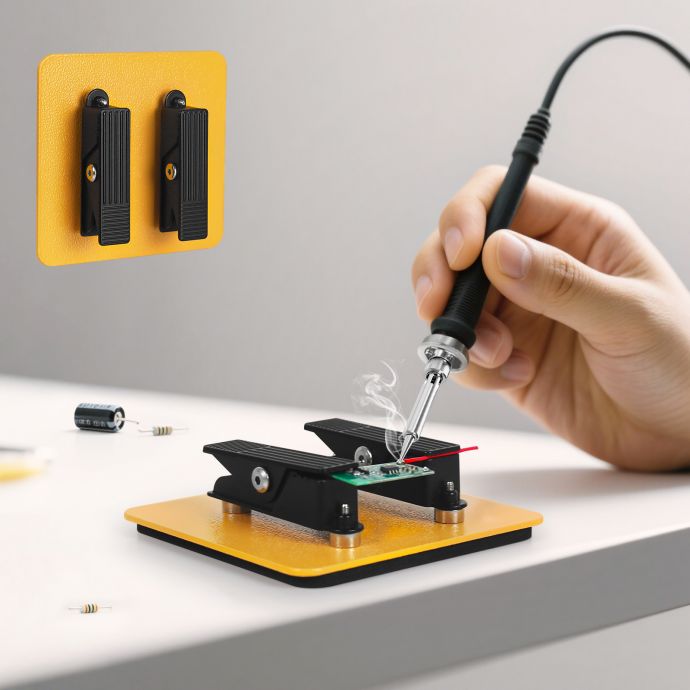
Soldering is a fundamental skill for electronics enthusiasts, hobbyists, and professionals alike. While it opens doors to creative circuit design and gadget repair, it comes with a hidden hazard: the toxic fumes released by heated solder and flux. These fumes may seem harmless—after all, you rarely see dense clouds unless you’re working in bulk—but their invisible vapors can pose serious threats to respiratory health over time. Most commercially available smoke extractors are costly, noisy, and sometimes inefficient. For makers and tinkerers on a budget, creating your own 12V smoke siphon is a satisfying way to secure safer air without breaking the bank. This article guides you through building an efficient, homemade fume extractor for your soldering station, tailored to hobbyist needs.
**Understanding Soldering Fumes and Health Risks**
Before diving into construction, it’s crucial to understand what you’re defending against. Soldering typically involves heating a metal alloy—commonly tin and lead—and a flux to remove surface oxides, helping the solder adhere to components. Both the solder and flux emit gases when heated, including:
- Rosin vapor from flux, which can cause allergies (occupational asthma).
- Tiny metal particles, especially when solder contains lead.
- Volatile organic compounds (VOCs), which are irritating and potentially carcinogenic.
Symptoms from exposure can range from simple throat irritation to chronic conditions with repeated inhalation. Thus, even if your solder is labeled “lead-free,” the fumes can still harbor components best avoided.
**The DIY Solution: 12V Smoke Siphon**
A smoke siphon uses a fan or blower to draw soldering fumes away from your workspace and passes them through a filtration system. There are three key goals:
1. Sufficient airflow to capture fumes at the source.
2. Filtration to trap harmful particles and chemicals.
3. Portability and low noise—suited for home workshops.
Most commercially available smoke extractors rely on a similar principle but often cost upwards of $50. A homemade version hits the same benchmarks for a fraction of the price, and customization means you can fit it perfectly into your workspace and workflow.
**Core Components and How to Source Them**
To build a reliable 12V smoke siphon, you’ll need the following parts:
1. **12V Fan or Blower**
The heart of your extractor, this component will draw air from the soldering point.
- Look for a fan rated at 100–150mm diameter (computer case fans work well).
- Opt for a brushless fan for longevity.
- Ensure airflow is about 100-150 CFM (cubic feet per minute).
- Salvage from old PC towers or purchase online for under $20.
2. **Activated Carbon Filter**
This traps VOCs and prevents odors.
- Available as pre-cut sheets for smoke extractors and aquariums.
- Purchase online, or repurpose from old air purifiers.
3. **HEPA Filter (optional, but recommended)**
For trapping ultrafine particles.
- Off-the-shelf filters for air purifiers can be cut to size.
- Use in tandem with the carbon filter for maximum efficiency.
4. **12V Power Supply**
- Any regulated 12V adapter with at least 1A output suffices.
- You can repurpose old wall bricks; check for matching DC barrel connectors.
5. **Enclosure or Frame**
- A simple open-face box made of MDF, plastic, or metal.
- For portability, keep it lightweight.
6. **Switch and Wiring**
- On/off rocker switch.
- Basic insulated wires, crimp connectors, or solder.
7. **Optional: Flexible Hose or Ducting**
- If you want to direct extraction more precisely.
**Design Choices and Planning**
Your design depends on workspace, typical projects, and desired mobility. Here are two common approaches:
- **Desktop Extractor**: Fan/filter mounted in a compact enclosure, placed near the solder area.
- **Articulated Arm Extractor**: Hose attached to an adjustable arm, allowing you to position the extractor directly above your soldering work.
For most home setups, a desktop unit with adjustable tilt suffices. Ensure the fan’s “intake” faces your workspace, with the exhaust directed away from you.
**Step-by-Step Assembly Guide**
Let’s build a classic desktop smoke siphon for a soldering station:
**1. Build the Enclosure**
- Measure your fan and filters.
- Cut MDF or plastic sheets to create a box—roughly 8" x 8" x 3" deep.
- The front should have an opening equal to the fan’s face.
- Cut slots for the filter(s) behind the fan, allowing easy replacement.
- Drill holes for power cable and switch.
**2. Install Filters**
- Place the HEPA filter directly behind the front opening.
- Add an activated carbon filter behind it—careful not to constrict airflow.
- Secure filters with removable clips or sliding tracks.
**3. Mount the Fan**
- Place the fan flush behind the filters, ensuring airflow direction is correct (sucking air through the filters, exhausting rearward).
- Fasten with screws, bolts, or double-sided tape.
**4. Wire the Power Circuit**
- Connect the fan to your 12V adapter via a rocker switch for easy on/off control.
- Insulate all connections; use heat shrink tubing or electrical tape.
**5. Assemble and Test**
- Screw or glue enclosure panels together.
- Plug in and test airflow through the filters.
- Check for leaks around edges; seal with gasket tape if needed.
**6. Optional: Add Adjustable Stand**
- Use a gooseneck lamp base or soldering iron holder to elevate or angle the unit towards your work.
**Performance Tips**
- Position the siphon as close as possible to the soldering spot.
- Replace filters every few months, depending on use (when airflow drops or odors increase).
- Clean fan blades periodically for optimal performance.
**Custom Upgrades and Enhancements**
Once the basic model is built, you can add features:
- **Fan Speed Control:**
Add a PWM or voltage regulator for variable airflow.
- **LED Lighting:**
Mount LEDs above the extractor for a well-lit workspace.
- **Arduino Air Quality Monitor:**
Integrate a sensor (like MQ-135) to alert you when fumes exceed safe levels.
- **Mobile Power Option:**
Adapt for battery power with a 12V lithium pack for ultimate portability.
**Safety and Maintenance**
Your smoke siphon is not a substitute for proper ventilation but does reduce direct exposure dramatically. Here’s how to maximize safety:
- Always work in a well-ventilated area—even with extractor in operation.
- Avoid using leaded solder when possible.
- Wear respirators for large-scale soldering jobs.
- Clean filters regularly; never operate with dirty filters.
**Cost Comparison**
Let’s break down the investment for a DIY unit versus a commercial model:
| Component | DIY Cost Estimate | Commercial Model |
|---------------------|-------------------|------------------|
| Fan/Blower | $12 | - |
| Carbon Filter | $10 | - |
| HEPA Filter | $8 | - |
| Enclosure | $10 | - |
| Switch & Wiring | $5 | - |
| **Total DIY** | **$45** | $65–$120+ |
As shown, a homemade extractor can rival commercial models in effectiveness for half the price, with the added benefit of customization.
**Why a Homemade Siphon Works So Well**
By focusing extraction right at your soldering station, this system captures harmful fumes before they disperse. Activated carbon does the heavy lifting for VOCs and odors, while HEPA traps particulate matter. The combination provides a dual barrier against both immediate and chronic respiratory risks.
Most store-bought units use similar fans and filters, but your DIY siphon can be tuned to your particular workspace. A larger or more powerful fan, more layered filtration, or better positioning means improved efficiency—all under your control.
**Environmental and Practical Benefits**
- **Eco-Friendly:**
Repurposing old fans and filters reduces electronic waste.
- **Silent Operation:**
Choose fans with lower decibel ratings, preventing distractions.
- **Compact Design:**
Fit into tight corners or even make a portable version for on-the-go repairs.
- **Educational Value:**
Building the unit sharpens your electronics skills and encourages safe practices.
**Soldering with Care: Practical Workplace Tips**
Having an effective smoke siphon is only one piece of the puzzle. Here’s how to further minimize exposure:
1. **Work Near an Open Window:**
Supplement extraction with natural airflow.
2. **Position Extractor Close to Tip:**
Fumes rise quickly; place extractor within a few inches of soldering.
3. **Take Breaks:**
Limit exposure duration, especially for prolonged sessions.
4. **Clean Work Area:**
Remove solder and flux residues to prevent secondary vapor release.
5. **Store Hazardous Materials Properly:**
Keep solder joints and flux stored away from living spaces.
**Conclusion: Breathe Easy and Solder Smarter**
Exposure to soldering fumes is a hidden risk for electronics hobbyists, but a home-built 12V smoke siphon provides a powerful solution. By combining affordable components, simple construction, and effective filtration, you can make your soldering station safe and comfortable. Not only will your DIY extractor shield you from harmful VOCs and particulates, it will also instill important habits for safe and sustainable tinkering.
Whether you’re repairing circuit boards, experimenting with Arduino, or building robots, your homemade fume extractor transforms soldering from a risky