When it comes to electronics repair, particularly PCB (Printed Circuit Board) work, precision, stability, and versatility are paramount. Any hobbyist, technician, or engineer knows the frustration that comes from juggling a soldering iron, tweezers, and magnifier while struggling to hold a tiny component steady. Enter NOEVSBIG’s 4-Arm Soldering Savior—a game-changing tool designed to elevate the accuracy and efficiency of PCB repair tasks.
## The Challenge of PCB Repair
Printed circuit boards are the backbone of modern electronics. From smartphones to industrial machinery, their delicate traces and components require careful handling during repair or modification. A typical repair scenario involves replacing surface-mount devices, reconnecting broken traces, or soldering wires to tiny pads. These tasks demand more than steady hands; they require a stable, adaptable workstation that keeps components in place without risk of damage.
Inadequate tools often lead to mistakes: components shift unexpectedly, solder bridges form, or traces lift due to excessive force. Relying on makeshift solutions—such as awkwardly stacked books, improvised holders, or the classic “third hand”—can compromise both the quality of repair and user safety.
NOEVSBIG’s 4-Arm Soldering Savior directly addresses these pain points, offering a specialized solution crafted for the unique demands of PCB repair.
## Key Features of the 4-Arm Soldering Savior
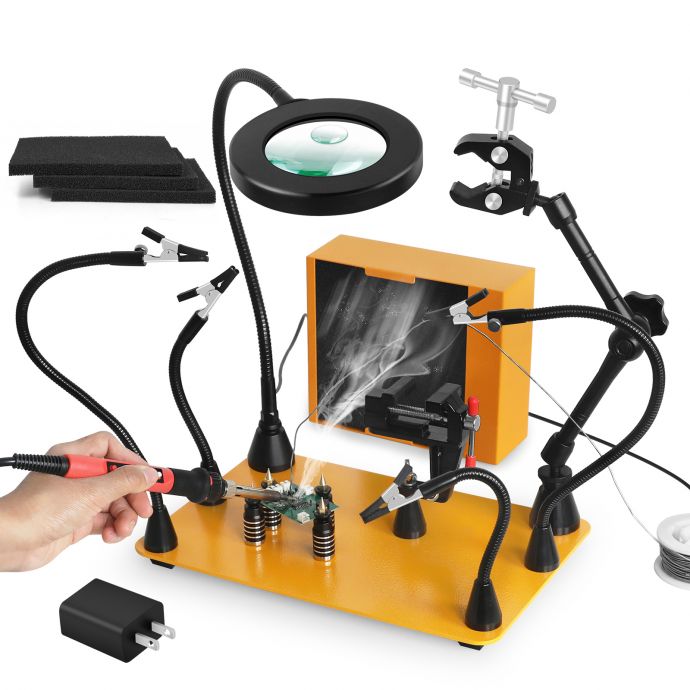
NOEVSBIG designed this tool with usability and adaptability in mind. Let’s examine the features that set it apart:
### 1. Four Flexible, Articulated Arms
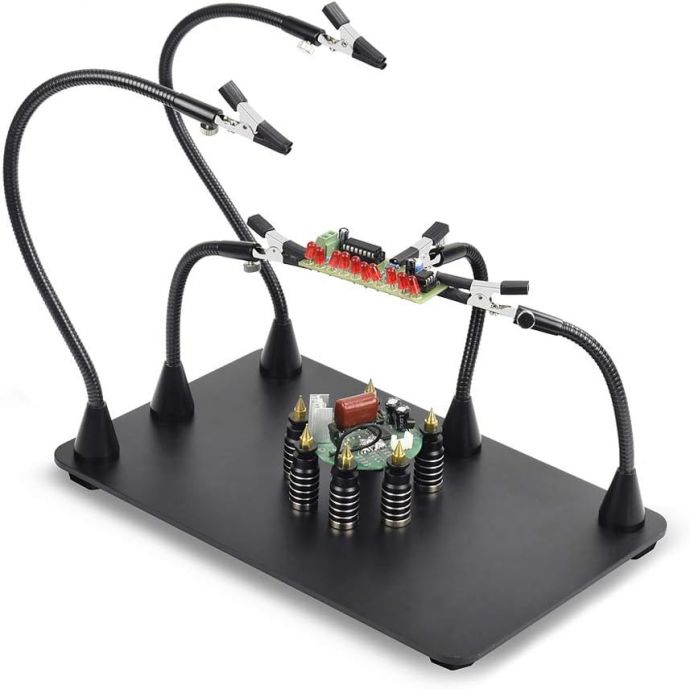
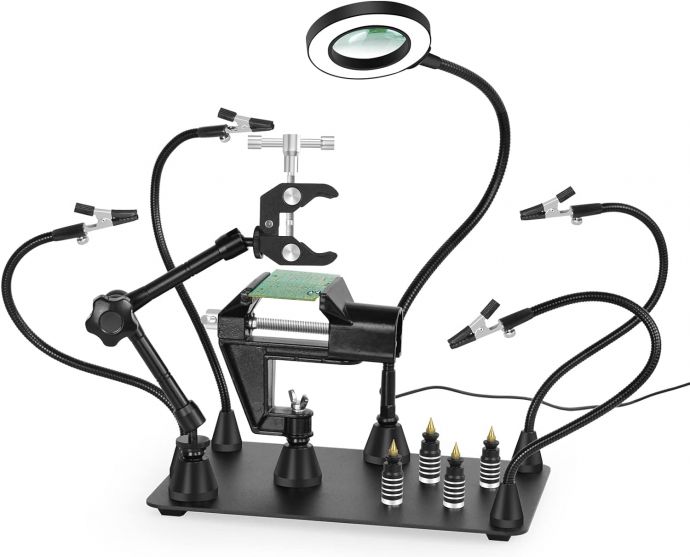
The hallmark of this soldering station is its quartet of flexible arms, each tipped with a precision alligator clip. These arms can be bent and rotated in virtually any direction, allowing the user to stabilize PCBs, wires, and components exactly where needed. This freedom is essential for multitasking: one arm might hold a PCB, another a wire, a third a delicate SMD component, and the fourth a magnifier or light.
### 2. Heavy-Duty, Non-Slip Base
Stability is critical in soldering. The weighted base ensures the station won’t tip or move during use, even when manipulating large boards or applying force. Non-slip pads underneath add further security without scratching your workspace.
### 3. Precision Alligator Clips
Each arm ends with a high-quality alligator clip, coated to prevent marring or damaging sensitive components. Unlike standard clips, these are sized for electronics work with a firm grip but gentle pressure, holding components securely in place while minimizing risk to fragile parts or solder pads.
### 4. Modular Design
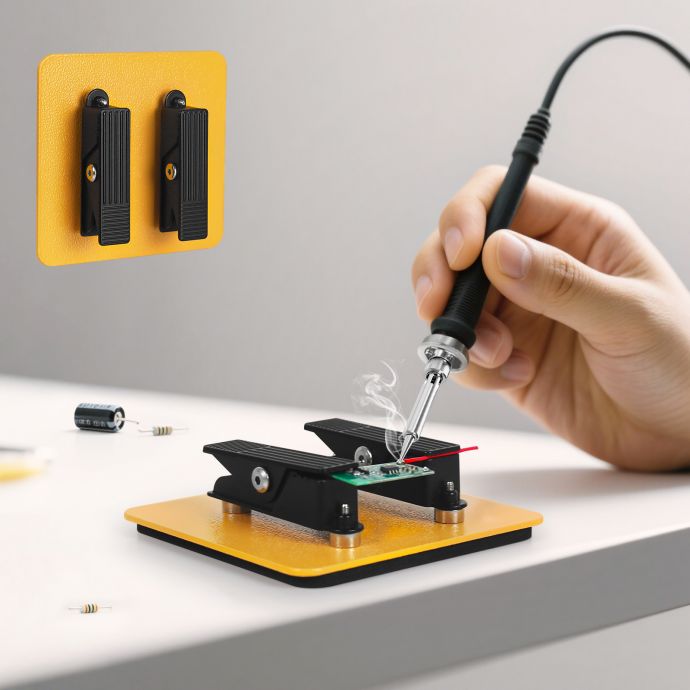
NOEVSBIG’s system is modular: arms can be detached and repositioned. This enables complete customization of the setup based on the size of the PCB, the number of components being worked on, or the nature of the repair.
### 5. Additional Accessory Compatibility
Recognizing that soldering is just one part of PCB repair, the Soldering Savior incorporates mounting points for accessories such as magnifying glasses, LED lamps, or even small fans. This expands its utility for inspection, diagnostics, and hands-free illumination.
## How the 4-Arm Soldering Savior Transforms PCB Repair
### Enhanced Stability and Control
The most immediate benefit is stability. The four arms allow you to fix the PCB securely, even if it’s an irregular shape or size. For example, if reworking a smartphone logic board, two arms can hold the PCB steady while the other arms hold a micro-wire and a magnifier. This reduces accidental movements that can ruin a good solder joint or dislodge adjacent components.
### Precision Positioning for Complex Repairs
Complex repairs—like replacing microchips or reflowing SMD pads—often require holding components in exactly the right spot while applying heat. The flexible arms enable fine adjustment, letting you position a component with surgical precision. You can also use the arms to route and tape down wires or temporarily hold a probe while measuring voltages during troubleshooting.
### Increased Productivity and Safety
By freeing both hands, the Soldering Savior allows for faster, safer work. You can direct your attention to the soldering iron and the task at hand, rather than worrying about holding components steady. This reduces fatigue and the likelihood of mistakes, especially with intricate repairs that demand concentration.
### Adaptability Across Project Types
Whether you’re working with small consumer electronics, prototyping a custom board, or repairing industrial control panels, the modularity and adjustability of the Soldering Savior make it suitable for almost any scenario. The arms can be removed or reconfigured, and the base remains stable even with larger assemblies.
## Practical Use Case Scenarios
Let’s explore how technicians and hobbyists use the 4-Arm Soldering Savior in real-world PCB repair situations.
### 1. Surface-Mount Device (SMD) Replacement
SMD components are tiny and can be challenging to handle. With the Soldering Savior, the PCB is held flat and steady, two arms grip the board, and a third arm holds the new SMD component in place. This setup allows precise alignment, so you can apply solder with pinpoint accuracy. The fourth arm can hold a magnifier, providing a close-up view essential for inspecting solder joints.
### 2. Wire Attachment and Jumper Creation
Often, repairing a broken trace involves attaching a wire to a tiny pad. One arm holds the PCB, another the fine wire, and the others assist with positioning or lighting. By adjusting the arms, you can keep the wire at the exact angle and length required, achieving clean, reliable repairs that would otherwise be cumbersome.
### 3. De-soldering Multi-Pin Components
Removing a multi-pin IC requires coordinated heating and extraction. The flexible clips can hold the board vertically, while another arm stabilizes the IC. This setup enables using a de-soldering tool or hot air gun with both hands, minimizing risk of heat damage or accidental drops.
### 4. Inspection and Testing
Troubleshooting PCBs often involves probing voltages or signals. With two arms holding the board, another stabilizing a probe, and the fourth holding an LED lamp, you can inspect and test without needing a second person or risking accidental shorts.
## Durability and Build Quality
Tool longevity is important, particularly for professionals who rely on their equipment daily. NOEVSBIG’s commitment to quality engineering is evident in the Soldering Savior’s materials:
- The base is constructed from robust, heavy metal to withstand years of use.
- Articulated arms are made from rust-resistant, flexible yet strong alloys, ensuring repeated adjustment doesn’t lead to wear or looseness.
- Clips are made of high-grade steel, with silicone or rubber coating to protect sensitive electronics.
This rugged construction assures that the Soldering Savior will remain a staple on your workbench for years to come.
## User Experience and Community Feedback
The Soldering Savior has received praise from both professional electronics technicians and hobbyist makers. Key points in user testimonials include:
- The freedom to work on intricate tasks without fear of the board slipping or components shifting.
- The modular arms’ durability, holding position well and not sagging over time.
- The convenience of being able to add magnifiers or lights directly to the station.
- Improved result quality—fewer solder bridges, stronger joints, and less accidental damage.
Some users have noted that the tool is especially suited for beginners, who may lack the dexterity or experience to juggle multiple items without aid. Working with proper support not only enhances safety but also cultivates good practices for future repairs.
## Comparison With Traditional Helping Hands
Traditional “third hand” soldering tools often consist of a couple of rigid arms and basic clips, sometimes attached to a magnifier. They serve a purpose, but their limitations become clear during complex repairs:
- Limited positioning flexibility;
- Weak clamping force that can’t secure boards confidently;
- Lack of compatibility with accessories.
In contrast, NOEVSBIG’s 4-Arm Soldering Savior offers significantly greater adjustability, stronger grip, and multi-accessory support. The additional arms provide the versatility needed for multifaceted repairs, making it a superior option for anyone serious about PCB work.
## Tips for Getting the Most Out of the Soldering Savior
1. **Plan Your Repair Layout**: Before starting, determine where to position each arm for ideal access to your board and components.
2. **Use Accessories for Magnification and Lighting**: Mount magnifiers or LED lights directly to the base for hands-free visibility.
3. **Keep the Arms Clean**: Remove excess flux or solder splatter from the clips to maintain a firm grip and protect sensitive components.
4. **Adjust Arm Tension When Needed**: Over time, joints may loosen. Tighten them periodically to maintain optimal stability.
5. **Experiment With Configurations**: Try different arm positions and accessory setups to discover the arrangement that best suits your repair needs.
## Who Should Use the 4-Arm Soldering Savior?
- **Electronics Repair Technicians**: For daily PCB repairs where efficiency and accuracy are crucial.
- **Hobbyists and Makers**: For assembling prototypes, modifying gadgets, or upcycling old electronics.
- **Educational Institutions**: Engineering labs or electronics classes benefit from student-friendly, stable soldering setups.
- **Anyone Starting Out in Electronics**: Beginners can focus on learning soldering skills without worrying about their board moving or components dropping.
## The Bottom Line
NOEVSBIG’s 4-Arm Soldering Savior is not just another tool—it’s a transformative addition to any electronics repair workstation. By providing unmatched stability, modular adaptability, and accessory compatibility, it empowers users to tackle PCB repairs with confidence and precision.
For professionals, this means increased productivity and reduced mistakes. For hobbyists and learners, it turns challenging repairs into manageable tasks, laying the foundation for successful electronic projects.
As electronics continue to evolve—smaller, more complex, and more integrated—the need for intelligent, supportive tools becomes ever more