When it comes to soldering and precision electronics work, the right tools can mean the difference between frustration and satisfaction. Crafters, makers, and electronics hobbyists know the agony of juggling tiny wires, circuit boards, and components while attempting to achieve flawless connections. Traditional “third hand” helpers, with their alligator clips and stiff wires, have long been the go-to solution for stabilizing projects, but their limitations are clear—jaws that slip, bases that tip, and inflexible arms that never seem to hold your work just right.
Imagine a workstation reimagined from the ground up; a marvel of flexibility, stability, and ease of use. The ultimate magnetic third hand helper with an extra large workspace is exactly that: a tool that unlocks a new dimension of precision, transforming soldering and other hands-on projects into pure, creative flow.
## The Evolution of the Third Hand
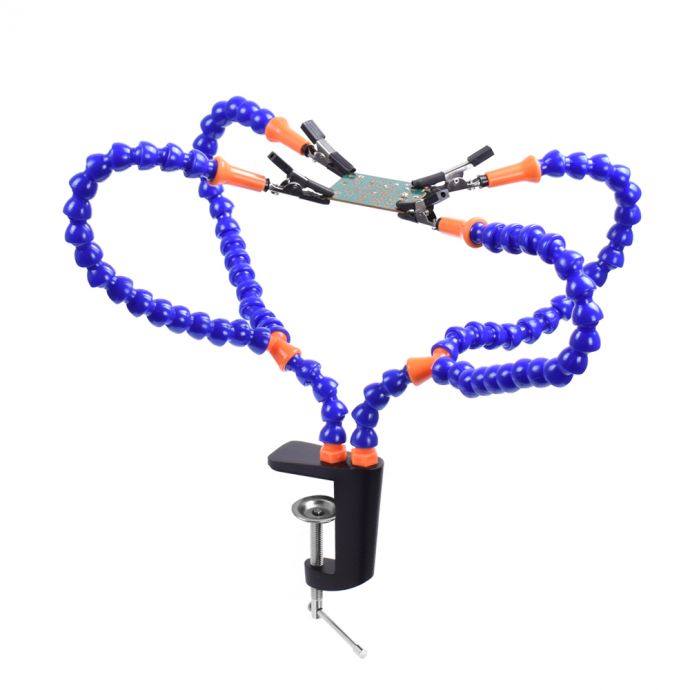
The original “third hand” tool introduced much-needed functionality to the world of electronics assembly. Its core design—a pair of adjustable arms ending in alligator clips, attached to a weighted base—was simple yet effective for holding light objects in place. But as components grew smaller, and the complexity of assemblies increased, shortcomings grew obvious. Metal arms had limited reach and maneuverability, clips left marks on delicate surfaces, and bases were often too small to prevent accidental tipping.
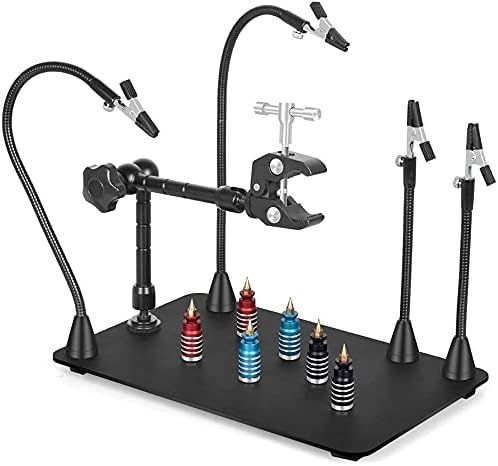
Fast forward to today’s advanced magnetic third hand workstations, and the changes are dramatic. Instead of rigid arms, modular magnetic system features flexible arms of steel, encased in protective coating, topped with precision grips or silicone-tipped alligator clips. Each arm is anchored to a massive, stable base by powerful, repositionable magnets that can snap firmly anywhere on the work surface. The result? Infinite adjustment possibilities, unwavering stability, and an expansive workspace that accommodates even the most ambitious projects.
## Why Workspace Size Matters
Many soldering helpers limit your workspace to a few inches. That’s fine for basic jobs, but a cramped work area can create more problems than it solves. Wires tangle, tools compete for space, and awkward arm positions lead to hand fatigue and mistakes. In contrast, an extra large magnetic workstation often starts at 12” x 10” and can be even bigger. This generous area provides plenty of room for:
- **Large circuit boards**
- **Multiple components or subassemblies**
- **Accessory tools like tweezers, flux pens, and small containers for screws**
With this much real estate, you can lay out parts without crowding, plan complex assemblies, and keep your tools within easy reach. Best of all, the base’s size and weight make accidental tipping almost impossible, even if you apply force with a soldering iron or hot air rework tool.
## The Power of Magnetic Modularity
What truly sets the magnetic third hand helper apart is its modular magnetic system. Instead of fixed arm positions, you have robust magnets—each rated for several pounds of pull—connecting every flexible arm to the flat steel or aluminum base. This brings several revolutionary advantages:
### 1. Absolute Stability
The magnets are strong enough to resist movement from most directions but allow you to slide arms to new positions in seconds. Unlike clamps or clips that can slip or twist unexpectedly, these arms simply don’t budge unless you want them to.
### 2. Infinite Adjustment Angles
Traditional helpers limit you to a few basic arm positions, but a magnetic system allows each arm to pivot 360 degrees at both the base and the component grip. You can move, tilt, or rotate every part of your project until it’s in the perfect position for soldering, gluing, inspecting, or assembling.
### 3. Add or Remove Arms as Needed
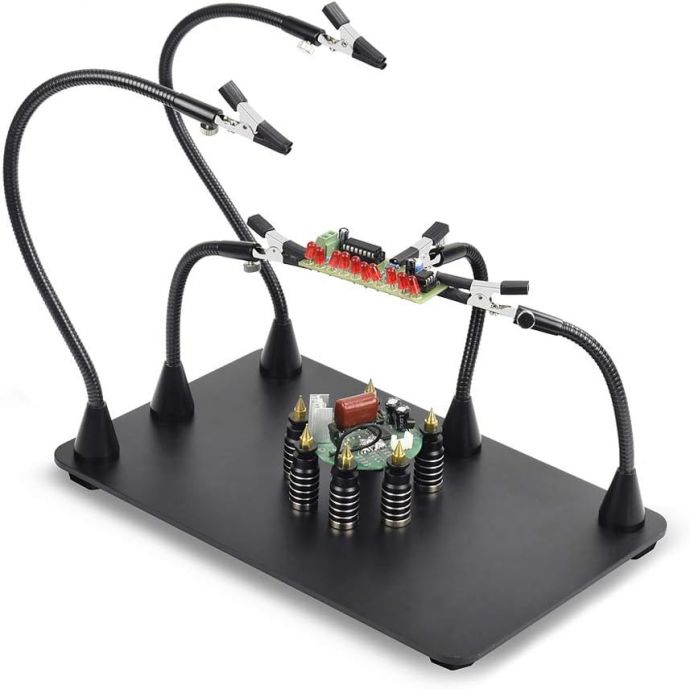
Not every project needs ten helping hands. With this system, simply add more magnetic arms for complex assemblies, or remove them for small, focused tasks. Some advanced workstations even allow you to add special tool holders—magnifying lenses, fume extractors, and more—giving you a truly customized workspace.
### 4. Clean, Durable Workspace
The workspace is often made from powder-coated steel, aluminum, or an anti-static mat, providing a clean, smooth, and durable environment. Spilled solder won’t damage it, and static-sensitive parts are protected from electrostatic discharge (ESD).
## How It Revolutionizes Soldering and Crafting
Let’s walk through a real-world project: assembling a custom LED matrix. With a conventional third hand, you’d likely spend as much time fighting the jig as you do soldering—readjusting arms, holding the board with one hand, and avoiding the tool’s base. With the magnetic third hand helper:
1. **Layout the Project**
Spread your PCB, LEDs, and wires across the expansive workspace. Position arms with soft silicone grips to hold the PCB without scratches. Use additional arms to gently restrain a wire harness or connector in exactly the right place.
2. **Get the Perfect Angle**
Rotate the PCB to an angle where your soldering iron tip and your line of sight match perfectly. Need another clip for a batch of resistors? Slide extra arms into place, instantly.
3. **Hands-Free Precision**
You’re free to focus on the task with both hands—one for the iron, one for the solder. No slips, no shifting, no panic.
4. **Immediate Repositioning**
Time to flip the board? Rotate it or unclip, then move the arms to the new configuration with zero hassle. The stability of the base and the grippy magnets mean your layout never loses alignment.
5. **Complex Assembly Support**
Working on multi-board stacks? Attach a magnifying glass, bring in more arms, or lock a component at an odd angle for tricky solder joints. The modular system grows with your needs.
## Beyond Electronics: Multidisciplinary Marvel
While initially designed for electronics work, this workstation is invaluable across disciplines. Jewelry makers use it for holding fine chains and stones for repair and assembly. Model builders steady tiny plastic or metal parts for painting and gluing. Even woodworkers and watch repair professionals find the infinite adjustability and firm grips ideal for steady, detailed work.
## Ergonomics and User Comfort
Fatigue is the enemy of precision. Traditional helpers demand contorted hand positions, constant readjustment, and a death grip on delicate components. The magnetic third hand eliminates these issues, thanks to:
- **Height and angle adjustability**—bring your work close, far, high or low.
- **Soft-touch grips**—protect your parts and your hands from sharp edges and excessive compression.
- **Room to rest hands and arms**—the extra large base lets you comfortably brace elbows, steadying your movements.
For extended projects that might otherwise result in eye, neck, or wrist strain, this ergonomic superiority is transformative.
## Durability and Maintenance
Quality third hand helpers are built to last from steel, aircraft-grade aluminum, or advanced composites. The magnetic arms are typically powder-coated and resistant to heat and chemical spills. Light cleaning removes flux or solder residue. The silicone grips and ESD-safe features protect against accidental damage to both tool and project.
If a magnetic arm loses power (an unlikely event), replacement is simple—slide in a new one and keep working. The modular system means you’re never left without options, and the base can even serve as a storage surface for parts and spare tools.
## Who Benefits from the Magnetic Third Hand Workstation?
The utility of this tool transcends expertise and industry. Here are just a few examples:
- **Hobbyists and makers**
Whether you’re a weekend warrior or full-time tinkerer, you’ll appreciate the freedom to build, repair, and prototype with minimal hassle.
- **Professionals**
Electronic engineers, audio repair techs, or jewelers can keep workflows moving at maximum efficiency and accuracy.
- **Educators**
Teaching soldering or assembly? The workstation lets students learn safely, with minimal frustration from unsteady hands or slipping components.
- **Anyone with Fine-Motor Limitations**
The hands-free system is a godsend for anyone with arthritis, tremors, or limited hand strength, bringing precision within reach for all.
## Buying Guide: What to Look for in a Magnetic Third Hand Helper
Not all helpers are created equal. Here’s what to look for:
- **Large, stable, non-slip base**—at least 12” x 10” for comfort and safety.
- **Strong magnetic arms**—shouldn’t drift or slip, even under moderate load.
- **Flexible, easily repositionable arms**—360-degree movement at all joints.
- **Adjustable grips or clamps**—preferably with soft, non-marring tips.
- **ESD-safe surface and components**—crucial for modern electronics.
- **Optional attachments**—magnifiers, fume extractors, tool racks.
- **Quality construction**—powder-coated steel or machined aluminum for longevity.
## Tips for Getting the Most from Your Magnetic Workstation
- **Organize before you begin.** Lay out all parts and tools on the workspace. Add or remove arms for optimal access.
- **Customize your grip.** Use soft grips for delicate items, and firmer clips for heavier parts.
- **Label positions.** Use masking tape or dry-erase markers to label positions on the base for repeatable setups.
- **Clean regularly.** Wipe down the base and grips with an alcohol solution after soldering sessions.
- **Upgrade as you grow.** Add more arms or attachments as your project needs evolve.
## Conclusion: Unlocking a New Level of Craftsmanship
The extra large magnetic third hand workstation is more than just a convenience—it’s a fundamental upgrade to your crafting arsenal. By providing unwavering stability, infinite adjustment, and an expansive, ergonomic workspace, it shatters the limitations of traditional jigs and brings flawless execution within reach.
Whether you’re building a high-stakes electronics project, soldering one-of-a-kind jewelry, or del