Soldering electronics is essential for makers, hobbyists, and engineers alike. But lurking behind each joint is an invisible threat—solder smoke. Whether using traditional lead-based solder or modern lead-free varieties, fumes contain particulate matter and chemicals that can be harmful in both the short and long term. If you’ve ever noticed the tickle in your throat, watery eyes, or a lingering smell after a long soldering session, you’re experiencing the impact firsthand. Thankfully, with some creativity, basic DIY skills, and a reliable 12V power source, you can build your own smoke slayer: a solder fume extractor that keeps your workspace safe, healthy, and comfortable.
In this comprehensive guide, we’ll explore soldering hazards, system design, material selection, step-by-step assembly instructions, and tips to maximize your extractor’s effectiveness. Let’s turn your soldering station into a safe haven for creativity and well-being.

## Understanding Solder Smoke Hazards
### What’s In Solder Smoke?
The smoke you see (and smell) when solder melts is more than just annoyance. It contains:

- **Flux fumes:** The rosin-based or synthetic flux emits aldehydes, acids, and other irritants when heated.
- **Metal particulates:** Solder contains metals like lead, tin, copper, or silver. Tiny particles can become airborne.
- **Volatile organic compounds (VOCs):** Especially from newer lead-free solders and fluxes, these can be toxic or carcinogenic.
- **General irritants:** Eyes, throat, lungs—all can be affected by repeated exposure.
### Health Impacts
Short-term effects include headaches, nausea, watery eyes, coughing, and respiratory irritation. Long-term exposure can aggravate asthma, increase risk of allergic reactions, and contribute to chronic respiratory conditions. Lead-based solder brings its own risks—in particular, neurotoxicity.
### Minimizing Exposure
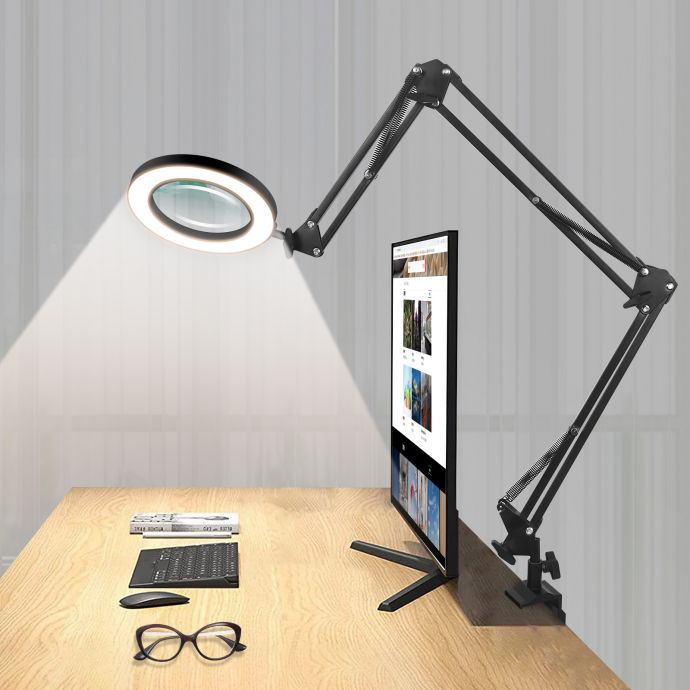
If you’re soldering frequently or for prolonged periods, extraction is essential—not just for comfort, but for health. Good ventilation is helpful, but direct extraction from the source is far superior. That’s where your homemade 12V smoke slayer comes in.
## The Ultimate DIY Solution: Why 12V?
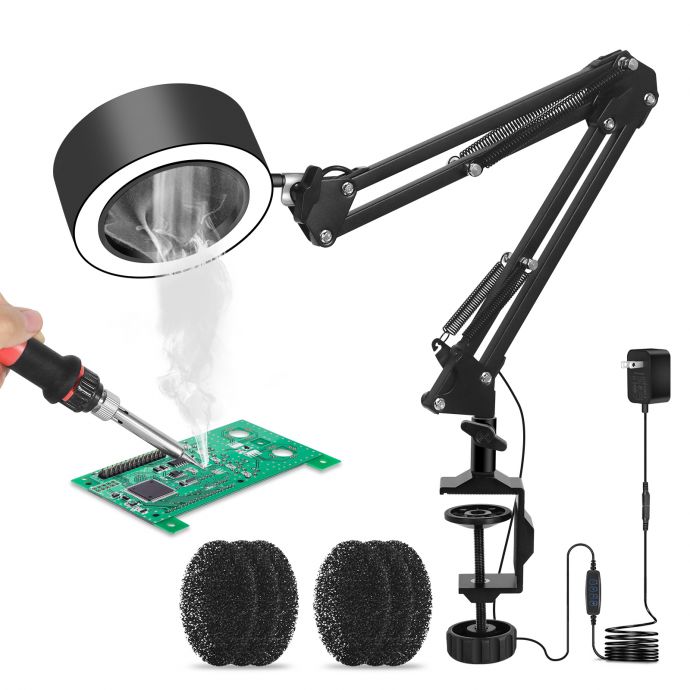
Commercial fume extractors exist, but they’re often expensive, noisy, and bulky. Building a personalized solution lets you tailor performance, size, and aesthetics to your workspace.
### Why 12V Power?
- **Ubiquity:** 12V power supplies are everywhere—from wall adapters to batteries.
- **Safety:** Low voltage minimizes risk, ideal for hobby environments.
- **Efficiency:** Many quality fans and filters are designed for 12V systems.
- **Portable:** Easily adapted for mobile workstations, or battery-operated setups.
## Core Components of Your Smoke Slayer
Building a reliable solder fume extractor requires careful selection of each component:
### 1. The Heart: 12V Fan
A fan is the engine of your system. Here’s what to look for:
- **Type:** Computer case fans (120mm/140mm) are ideal—high airflow, quiet operation.
- **Airflow:** Aim for 40-80 CFM (cubic feet per minute) for desktop use.
- **Noise:** Quieter is better. Look for ball-bearing or fluid dynamic fans.
- **Mounting:** Standard frame makes installation easy.
### 2. Filtration: Activated Carbon Filter
While a fan pulls fumes away, only a filter removes toxic elements. Activated carbon is the gold standard—it absorbs chemicals, VOCs, and odors.
- **Shape:** Flat carbon sheets (like aquarium filters) or pre-cut pads.
- **Thickness:** Thicker = better, but can restrict flow. Balance is key.
- **Replacement:** Filters need periodic changing.
### 3. Housing/Frame
The extractor needs a structure. Options include:
- **3D printed case:** Customizable, lightweight.
- **Wooden box:** Easy to assemble, sturdy.
- **Plastic project enclosure:** Readily available.
- **Metal frame:** Durable, but harder to work with.
### 4. Power Source
- **Adapter:** Standard 12V 2A wall plug.
- **Battery:** Sealed lead-acid or lithium packs for portability.
- **DC plug:** Compatible with fan and any controls.
### 5. Extras (Optional)
- **Fan speed control:** Simple potentiometer or PWM controller.
- **On/off switch:** For convenience.
- **LED indicator:** Shows system status.
## Planning Your Build: Choosing Materials
Before you start assembling, collect your parts:
- **One 12V fan (120mm recommended)**
- **Activated carbon filter pad (cut to fit)**
- **Frame/housing material (wood, plastic, or 3D printed)**
- **12V power adapter**
- **Switch and wiring**
- **Screws, hot glue, or zip ties for mounting**
You’ll also need basic tools: screwdriver, soldering iron (for making connections, ironically!), wire stripper, and possibly a drill.
## Step-by-Step Assembly Guide
### Step 1: Designing Your Housing
Measure your fan, filter, and workspace. Decide if the extractor will stand upright, lay flat, or attach to your soldering station. Draw rough sketches—it helps visualize construction and filter placement.
**Tip:** Place the fan close to the soldering area but not so close as to disrupt your hand movements.
### Step 2: Constructing the Frame
Option 1: **Wooden Box**
1. Cut panels to fit the fan and leave room for air intake.
2. Create a filter slot at the fan intake.
3. Assemble with screws or glue.
Option 2: **3D Printed Case**
1. Design an enclosure with filter holder and fan mount.
2. Print in PLA or ABS.
3. Snap together or secure with screws.
Option 3: **Plastic Enclosure**
1. Cut holes for fan and filter.
2. Mount fan behind filter with screws or hot glue.
3. Ensure a snug fit to avoid air leaks.
### Step 3: Fitting the Fan
Mount the fan so that it pulls air through the filter. Use screws, glue, or zip ties as needed. Confirm that the fan is oriented to pull air (not push out).
### Step 4: Installing the Filter
Cut the activated carbon filter to cover the fan intake. Mount securely—either in a slide-in slot, or sandwiched between layers of mesh for support. The filter must be easy to replace.
### Step 5: Wiring and Controls
Wire the fan to the power supply, optionally adding a switch and/or speed controller. Solder connections, cover with heat shrink or electrical tape.
- Red wire: positive (+)
- Black wire: negative (–)
- Switch: insert on positive line
Plug in your adapter and check the fan operation.
### Step 6: Final Assembly and Testing
Place the extractor near your soldering area—ideally 10–20 cm from the tip. Test with flux—you should see the smoke drawn into the extractor, disappearing through the filter.
**Check:**
- Is airflow strong enough?
- Is fan noise acceptable?
- Does smoke visibly enter the filter zone?
- Smell—does the filter remove odor?
## Customizations and Upgrades
### Adjustable Arm
Mount your extractor on a swing arm or flexible gooseneck for precise positioning.
### HEPA Filter Add-on
Add a HEPA layer for ultra-fine particle capture—a great choice for allergy sufferers.
### Multi-Fan Array
For larger workspaces, build a dual-fan system for higher airflow.
### Silent Operation
Choose premium quiet fans for minimal distraction.
### Portable Pack
Enclose the system in a small box with rechargeable battery for field use.
## Maintenance: Keeping Your Smoke Slayer Effective
- **Filter replacement:** Activated carbon loses effectiveness over time. Replace every 30–50 soldering sessions, or when smoke odor returns.
- **Fan cleaning:** Dust and solder particulate can accumulate. Wipe down blades monthly.
- **Wiring check:** Inspect connections and insulation periodically.
## Practical Usage: Tips for Maximum Protection
- **Keep fan close:** Place extractor 10–20 cm from the soldering tip for best capture.
- **Work in well-ventilated space:** Extraction is great, but extra airflow helps dilute remaining fumes.
- **Replace filters regularly:** Don’t ignore diminishing performance.
- **Avoid blocking:** Keep filter and intake clear of obstructions.
## Soldering Safety Beyond Extraction
Your smoke slayer is a strong defense, but consider these additional safety tips:
- **Use lead-free solder when possible:** Reduce exposure to neurotoxins.
- **Wash hands after soldering:** Prevent accidental ingestion of heavy metals.
- **Avoid eating/drinking during sessions:** Solder residues can contaminate.
- **Wear safety glasses:** Flux splatter can harm eyes.
- **Store solder safely:** Keep away from children and pets.
## The Science: Why Activated Carbon Works
Activated carbon is a porous material formed from coconut shell, wood, or coal. Its surface area is massive, containing millions of microscopic pores. When smoke passes through, organic molecules and vapors stick to the carbon, trapping toxins and odors.
- **Adsorption:** Unlike absorption, molecules adhere to the surface, not soak in.
- **Efficiency:** Most VOCs and gases are trapped, but carbon doesn’t capture ultra-fine particulates. That’s why HEPA is sometimes added.
- **Replacement is crucial:** Saturated carbon loses effectiveness; regular changes are vital.
## Alternative Extraction Designs
If you’re feeling adventurous, try these variations:
- **Box fan with filter:** Larger system for workshop-wide extraction.
- **Inline duct fan:** Mount above your station for vertical extraction.
- **Mini USB-powered fan:** For small, portable workspaces.
- **DIY cyclone separator:** Separate particulates before filtering.
## Troubleshooting: Common Problems
- **Weak