Anyone who has ever tackled a delicate soldering job, tried to tightly coil jump rings for jewelry, or balanced a tiny circuit board during repair has muttered the same lament: “If only I had another pair of hands.” Enter the Third Hand Revolution—a modern, magnetic helping hands clamp system—an essential upgrade for anyone who undertakes small electronics repair, jewelry crafting, or intricate DIY projects. This innovative workstation is transforming the way enthusiasts and professionals alike complete precise tasks, solving age-old frustrations and dramatically improving workflow, efficiency, and results.
## The Everyday Frustrations of Precision Work
Fine, dexterous tasks are the backbone of electronics, jewelry, and creative hobby communities. Yet, everyone from seasoned professionals to hobbyists faces common obstacles:
- Components slip just as you go to solder a joint.
- Tiny wires move when you try to tin them, leading to shaky results.
- Assembling delicate jewelry means you must support, position, and secure several pieces with just two hands.
- Complex repairs demand near-microscopic attention but require tools or parts secured at odd angles.
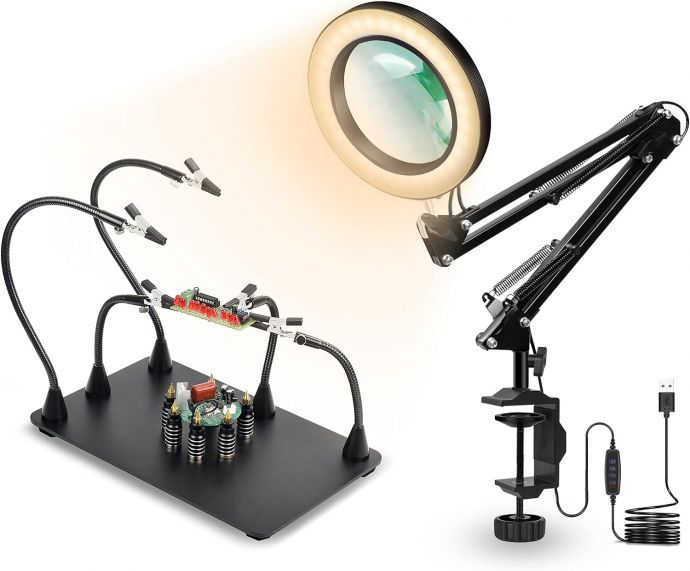
Traditional “helping hands”—basic stands with alligator clips—have been around for decades. However, their limitations quickly become apparent: clips can be too stiff or too loose, arms may not hold position, and larger items don’t fit. Many end up improvising awkward setups with tape, rubber bands, or spare tools, inevitably risking damage to the project or sacrificing precision.
## The Magnetic Helping Hands Clamp: A Game-Changer
Recent innovations have completely reimagined what a “third hand” can be. The latest magnetic helping hands clamp is a remarkable leap forward, combining robust modularity, flexibility, and stability in a single platform. Unlike old-fashioned stands, contemporary versions feature:
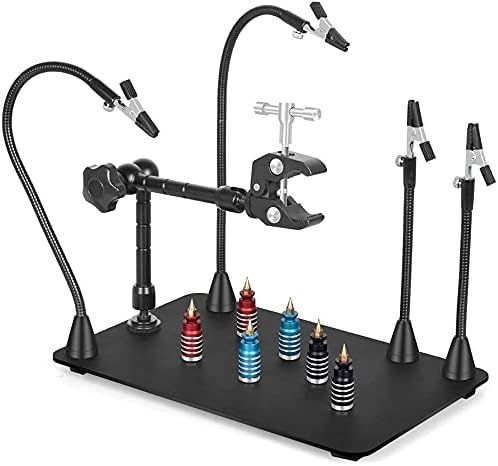
- **Magnetic bases for each arm**, allowing you to position, move, and anchor them exactly where needed.
- **Fully adjustable gooseneck or segmented arms**, which retain their shape and support the weight of tools, boards, or jewelry components with ease.
- **Interchangeable grips and clamps**—from soft-tipped alligator clips for electronics to padded grips for delicate jewelry or heat-resistant silicone for soldering.
- **Heavy-duty weighted base or anti-skid feet** to ensure nothing shifts unexpectedly.
These improvements have turned the third-hand station from a grudgingly necessary accessory into an indispensable, go-to workspace essential for meticulous work.
## Why Precision Matters in Electronics, Jewelry, and DIY
The world of small-scale craft and repair demands the utmost precision. Here’s why having total control and stability is crucial:
### Electronics Repair & Prototyping
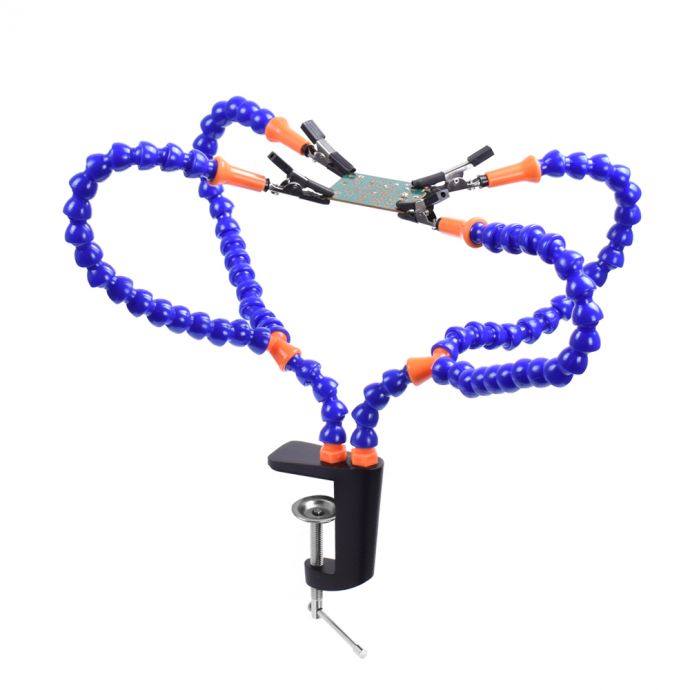
When soldering surface-mount components or repairing phone connectors, the separation between a reliable connection and complete failure comes down to a millimeter or less. An unsteady board can “float” just as the solder melts, creating cold joints or bridging pads. Precision clamping ensures components remain steady, giving your work professional integrity and longevity.
### Jewelry Crafting
Designing and fabricating fine jewelry requires a steady hand. If components move while you join or solder, the piece can be misaligned, compromising both durability and aesthetics. The ability to hold rings, chains, or findings at exactly the right angle—without tension or awkwardness—translates to cleaner joints, faster work, and less frustration.
### DIY Projects
From scale model assembly to crafting wooden decor, DIYers often balance tiny pieces for gluing, painting, or wiring. Multi-position clamps and grips keep parts stable for both hands-on work and hands-free waiting periods (as glue sets, for example). Task success rises with each extra “hand” on your bench.
## Features That Set the Magnetic Helping Hands Clamp Apart
Let’s take a closer look at the key design features that have elevated this new breed of soldering aid stations:
### Modular Magnetic Arms
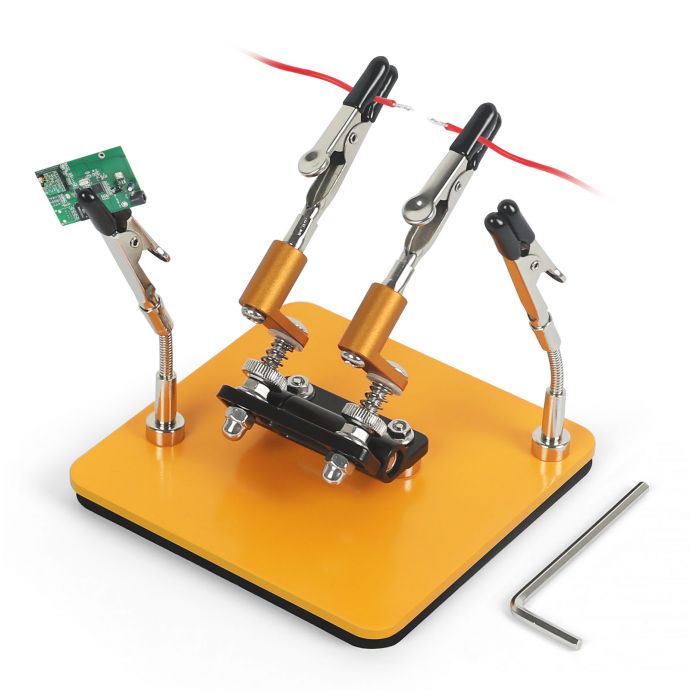
Forget about fixed arms. Each magnetic arm can be placed anywhere on the heavy steel base—close together for small work, spread wide for a large PCB, or staggered at different heights. The magnetic force is strong enough to resist accidental bumps, but repositioning is as easy as sliding and snapping into a new spot.
### Alligator Clips with a Twist
Modern clamps come with swappable tips—fine for electronics, broad for jewelry, silicone for heat resistance. Many offer full 360-degree rotation and a quick-locking collar, so you can orient the grip exactly as needed and lock it into position. No more struggling with that awkwardly angled wire or tiny pin.
### Weighted, Stable Base
A common frustration with old “helping hands” is their tendency to tip over or scoot across the desk. The upgraded workstation uses a heavy, low-profile base (often steel) or anti-slip pads, giving you peace of mind that your tools—and your project—will stay put.
### Expandability for Every Project
Unlike fixed two-arm models, some platforms allow adding extra arms, extension rods, or specialty attachments (such as magnifying lenses or solder roll holders). Your “third hand” can become a fourth, a fifth, or whatever the project calls for.
### Heat Resistance
Soldering work can quickly destroy inferior clamps. High-quality helping hands include heat-resistant clips, flame-retardant materials, and insulated arm sections. That means you can work comfortably with a soldering iron, hot glue, or small torches for jewelry without worry.
## How This Soldering Aid Station Improves Workflow
The difference is immediate as soon as you put the magnetic helping hands clamp to work:
1. **Set Up Fast:** Place your PCB, component, or jewelry piece in the grips in seconds—no more fussing with stiff arms or tape. Build your layout around the project, not the other way around.
2. **Work Safely:** With firm, stable support, you can solder, glue, cut, or file without risking a slip that could damage delicate parts or cause injury.
3. **Access Every Angle:** Spin, tilt, or raise components as needed. Solder under, over, or sideways without unmounting the project.
4. **Reduce Mistakes:** With unwavering stability, each step is cleaner. Fewer cold solder joints, misaligned chains, or paint smears.
5. **Work More Comfortably:** Both hands are free for tools and materials—not wasted pinching something between your fingers or balancing on the edge of the table.
6. **Expand Capabilities:** Need another clamp for a three-part joint? Add one in seconds. Need to hold heat-sensitive material? Swap in a silicone grip.
## Real-World Applications
### Surface-Mount Soldering
Working with 0402 or 0603 SMD components is always a challenge. The magnetic helping hands clamp locks the board in place while you tweeze and solder. Tilt the board to let gravity work with you, or secure a magnifier for close inspection. The result is faster, more reliable work.
### Jewelry Chain Assembly
Holding several chain links and a tiny jump ring steady while closing them? The padded grips can secure the ends of the chain at the perfect angle, leaving both your hands free for the pliers and the torch. Delicate components are protected from scratches and heat.
### Prototyping and Tinkering
Whether breadboarding an Arduino sensor rig or assembling a custom flashlight, it’s common to need three or four hands—one for the soldering iron, one for the wire, one for the board, and one for the solder. Add as many arms as you need, repositioning them as the project demands.
### Small Model Repair and Detailing
Scale modelers know how frustrating it is to paint or repair tiny parts. With the clamp station, multiple pieces can be held for spraying, gluing, or fine detail work. Left overnight, the stable setup means parts are safe as glue dries.
## User Testimonials and Community Adoption
The revolution isn’t just in the features—it’s in the feedback. Makerspaces, repair cafes, and online DIY communities are abuzz with how the magnetic helping hands clamp is reshaping their work:
- “I can’t believe I used to try to solder with just pliers and tape. This thing changed everything for me.” – Electronics hobbyist
- “I use the station for nearly every piece I make. It holds delicate stones without marking them, and solder flows so much better when nothing moves.” – Jewelry designer
- “We bought three for the makerspace. Members use them not just for soldering, but for all kinds of assembly work. The adjustability is key.” – Makerspace coordinator
## Choosing the Right Station: What to Look For
Not all helping hands are created equal—here’s what to consider:
- **Number of arms:** At least two, but preferably more for complex tasks.
- **Magnetic vs. fixed:** Magnetic offers far more flexibility and expandability.
- **Clip type:** Look for interchangeable tips and heat-resistant options.
- **Base weight and size:** Heavier bases mean more stability; larger ones allow for bigger projects.
- **Materials and build quality:** Steel or anodized aluminum lasts longer and resists tipping.
- **Accessory support:** Add-ons like magnifiers, lighting, or solder spool holders expand usefulness.
Compare brands, read reviews, and consider your main activities before buying.
## Maintenance and Best Practices
For years of smooth operation:
- Keep magnetic bases clean for best grip.
- Occasionally lubricate moving joints with silicone spray.
- Wipe heat-resistant surfaces if flux or solder accumulates.
- Store the arms detached from the base to prevent accidental bends.
## The Future: More Than a Third Hand
The “third hand” is rapidly becoming the foundation of many small workbenches. New developments hint at even more tailored aids:
- **Smart clamps** that integrate heating elements or sensors.
- **Integrated lighting and magnification** for closer, more accurate work.
- **Wireless charging pads** for mobile device repair.
- **Digital readouts and camera attachments** for remote teaching and documentation.
As more