From intricate circuit repairs to ambitious DIY builds, electronics enthusiasts and professionals alike know that steady hands and good lighting aren’t always enough. Soldering, the delicate process that joins the electronic world together, often feels like a juggling act—two hands aren't enough, and a slip at the wrong moment can lead to damaged components or hours wasted troubleshooting bad connections.
Enter the world of "third hands": those helpful devices equipped with flexible arms and alligator clips, meant to hold your work steady. While traditional third hands have been a staple on workbenches for decades, many users have found them lacking. Flimsy bases, limited reach, and unstable arms that droop under the weight of a circuit board can lead to frustration and sub-par results. That’s where the Magnetic Helping Arms Station with its extra-large design comes in—a tool that isn’t just an incremental upgrade, but a true revolution for soldering enthusiasts.
Let’s explore how this innovation addresses the legacy limitations of prior designs, and why it is rapidly becoming an essential piece of kit for anyone serious about electronics.
## The Classic Struggle: Why Soldering Needs a Better Helper
If you’ve ever tried to solder small components onto a crowded PCB, you know the contortionist act required to hold parts in place, manage your solder wire, and keep your iron steady—all at once. Standard third hand tools aim to solve this by providing a stable stand with arms to hold your components. However, traditional third hands have clear limitations:
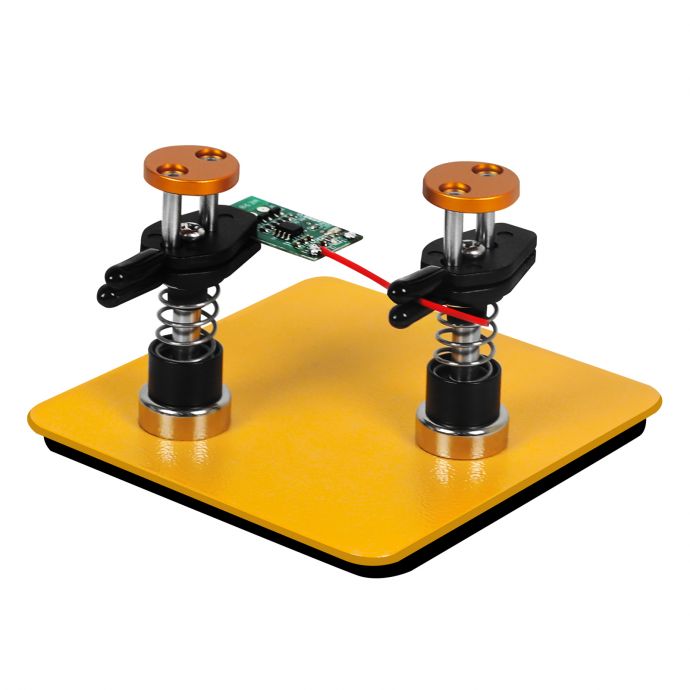
- **Stability issues:** Many older models feature small, lightweight bases that are easily tipped over with a slight tug.
- **Limited reach and flexibility:** Short arms and simple joints mean you can’t always position your work exactly how you need it.
- **Poor grip:** Weak or slippery alligator clips can’t always hold delicate wires or heavy PCBs with consistent security.
- **Workspace limitations:** Small form factors restrict the size of projects you can safely support.
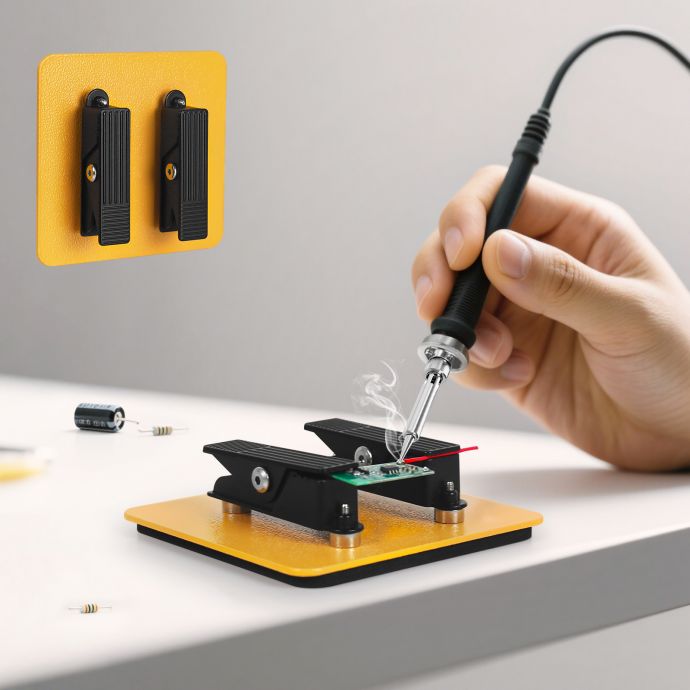
What’s been needed is a robust, adaptable solution that empowers creators to work confidently and efficiently, whether they’re fixing a loose battery contact or assembling a complex robot.
## Enter the Magnetic Helping Arms Station: A Game-Changer
The Magnetic Helping Arms Station addresses every shortcoming of its predecessors—and then some. Let’s break down what sets this system apart:
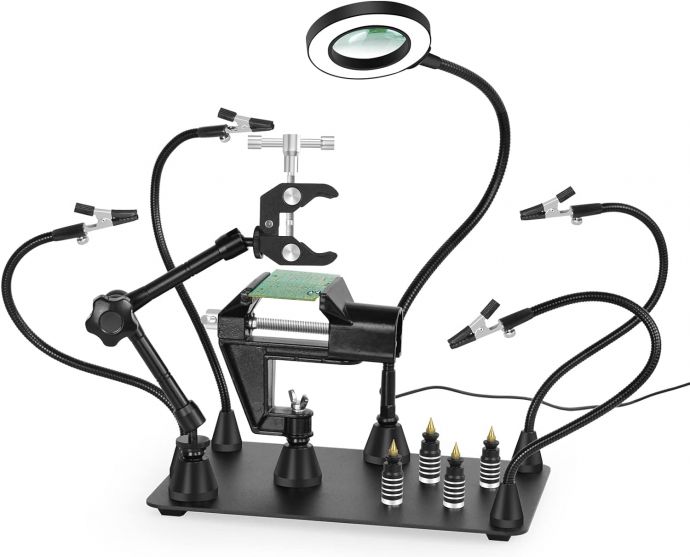
### 1. Extra-Large Design for Unmatched Stability
The heart of this system is its substantial, heavy-weight base. Unlike the tippy stands of older third hands, this station’s base is broad and dense, anchoring your work to the bench with unwavering security. Even when its arms are stretched to their full length, the station doesn’t budge. This translates into peace of mind: no more accidental topples, and no more interrupted workflows.
### 2. Modular, Magnetic Arms for Total Customization
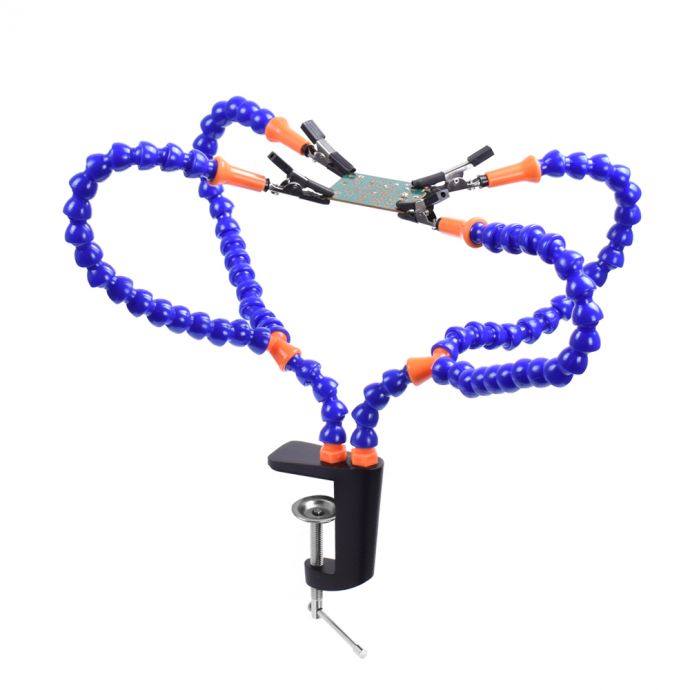
The defining feature of this station is its use of strong neodymium magnets at the base of each helping arm. This innovation means you can position the arms exactly where you need them, anywhere on the metallic base. If your project demands several points of support—say, for a large PCB or for holding multiple wires in place simultaneously—you simply add more arms, each snapping securely into place. The modularity is unmatched, supporting everything from tiny single-board projects to large assemblies.
### 3. Gigantic Capacity for Serious Projects
Forget wrestling with oversized boards that dangle precariously off the edge of a standard third hand. The extra-large design gives you enough space not only for massive circuit boards, but also for elaborate assemblies involving enclosures, multiple components, or even mechanical elements like gears and servos. This is great news for makers, robotics enthusiasts, and professional technicians who regularly work with more than just small gadgets.
### 4. Rock-Solid Precision with Adjustable Joints
Each arm is highly articulated, typically featuring multiple ball-and-socket joints. This means unrivaled flexibility: arms can be bent, twisted, and angled in any direction, allowing you to hold work at just the right tilt and height for comfortable, accurate soldering. Once positioned, they stay put—resisting droop and vibration even with heavier loads. Fine-tuning your setup is quick and easy, cutting down on setup time and improving solder joint quality.
### 5. High-Quality Alligator Clips and Accessories
The arms terminate in sturdy, insulated alligator clips with a strong bite—no more slippage or nicked wires. Some versions even come with silicone sleeves to protect delicate surfaces, or interchangeable attachments like mini vices, LED lights, or magnifiers. These accessories further enhance the versatility of the station, making it the cornerstone of a truly modern electronics workspace.
### 6. Magnetic Convenience for Rapid Project Changes
Since the helping arms attach magnetically, it’s a breeze to reposition them as you move between different tasks or projects. You aren’t constrained by fixed holes or weak clamps—simply lift an arm, set it down elsewhere, and get back to work. The reduced fuss translates to improved efficiency, especially during multi-step assembly or debugging processes.
## Transforming the Electronics Workbench Experience
The difference the Magnetic Helping Arms Station makes becomes clear the first time you use it. Here are some of the ways it transforms the electronics workbench experience:
### Improved Soldering Quality
With the work held rock-steady, you’re able to create precise, shiny, reliable solder joints every time. This reduces the risk of cold solder joints, bridges, and other common mistakes caused by shaky setups. It also allows you to focus on the details of your craft, rather than compensating for inadequate support.
### Less Fatigue, More Productivity
No more straining your hands or hunching awkwardly to keep things in place. The ability to position your circuit at the perfect angle, and to let the arms do the holding, means you can work longer, safer, and with less physical stress. This is especially valuable for professionals who spend hours at the bench, and for hobbyists tackling complex or extended builds.
### Enhanced Creativity and Experimentation
Because the station can accommodate a greater range of project sizes and configurations, you’re free to experiment with bigger or more involved designs. Whether it’s a sprawling synth module, a multi-board IoT device, or a home automation hub, the extra-large working area supports your ambition. You can even use the station to help assemble or debug mechanical assemblies that incorporate electronics.
### Workspace Organization and Safety
The ability to securely hold soldering irons, PCBs, wires, test leads, and magnifiers simultaneously means a tidier, less cluttered work surface. This not only looks professional, but also reduces the risk of accidents, lost parts, or component damage due to drops or short circuits.
## Real-World Use Cases
To appreciate the impact, consider these practical scenarios:
### Large-Scale PCB Assembly
Suppose you’re assembling a custom keyboard with a dense, multi-layer PCB. The magnetic arms can hold the board securely at several points, while additional arms grip wires or LEDs for installation. Unlike a small third hand, which might tilt or obscure access, the extra-large station lets you rotate, lift, or angle the whole piece as needed.
### Fine Wire Soldering
For projects involving very thin wires (like in headphone repairs, guitar pickups, or small sensors), stability is crucial—one jostle and a wire could snap or a pad could lift. The flexible arms can hold wires lightly but firmly, with protective silicone on the clips ensuring no damage to insulation or conductors.
### Multi-Tool Support
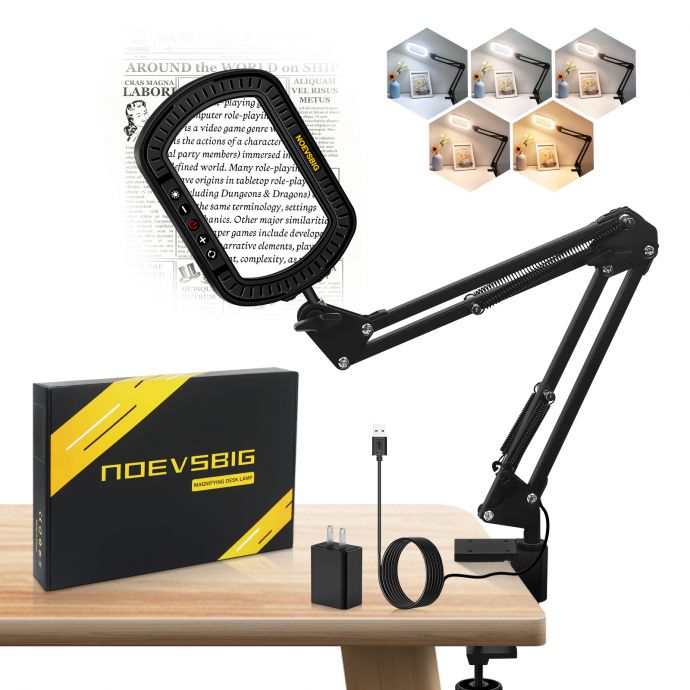
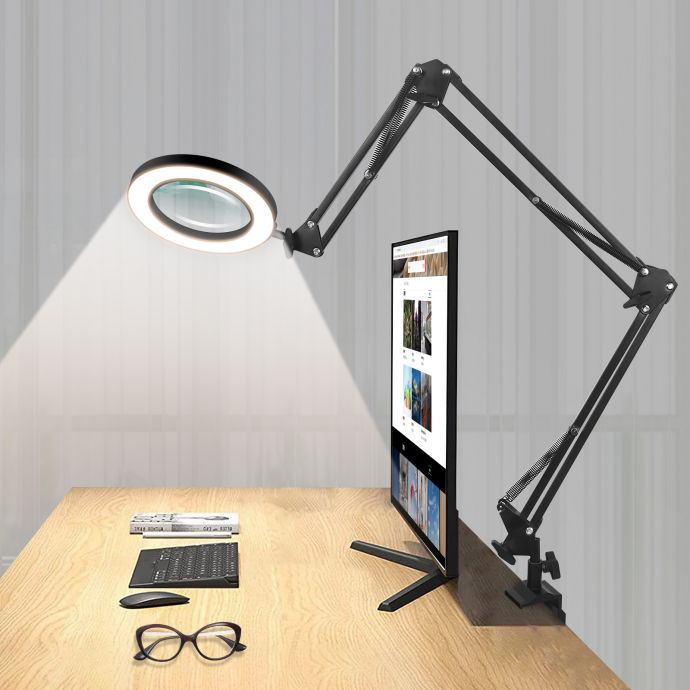
Need additional lighting or magnification? You can quickly attach an LED ring, a mini fan, or a magnifier, all held by extra arms positioned exactly where they’re needed. The modular system even allows for hands-free holding of test probes, freeing you up to make voltage checks mid-repair without a spare set of hands.
## Beyond the Electronics Bench
While designed with soldering and electronics in mind, the Magnetic Helping Arms Station is versatile enough for a variety of other precision tasks:
- **Jewelry making:** Secure tiny rings, stones, or wire for soldering, gluing, or unbending.
- **Model building:** Hold parts of a model aircraft or car for precise gluing and painting.
- **Watch repair:** Stabilize small gears or cases during assembly.
- **Crafts and fine woodworking:** Clamp and glue intricate pieces without risking misalignment or movement.
## Selecting Your Magnetic Helping Arms Station
Not all magnetic helping arms stations are created equal. As you shop for one, look for these key features:
- **A heavy, wide base:** The heavier and broader the base, the more stable your station will be.
- **Strong, quality magnets:** Ensure the arms won't slide under load.
- **Long, multi-jointed, and robust arms:** Arms should allow for a wide range of movement and resist sagging.
- **Good-quality clips and protective sleeves.**
- **Expandability:** The ability to add more arms or accessories as your needs grow.
Some premium models offer integrated USB power, built-in lighting, or even ESD-safe coatings for working with static-sensitive components.
## Bringing Professional Tools to the Hobbyist’s Bench
What was once the domain of high-end engineering labs is now accessible to everyone. The Magnetic Helping Arms Station represents a democratization of professional-grade tools, giving hobbyists, students, and small workshop owners the support they need to achieve truly polished, reliable results.
The extra-large format doesn’t just mean “bigger”—it means “better equipped” for the evolving nature of modern electronics. With circuit boards growing more complex and DIY projects becoming ever more ambitious, makers deserve tools that keep pace.
## Conclusion: A New Standard in Electronics Assembly
In the world of electronics, precision and stability aren’t luxuries—they’re requirements. The Magnetic Helping Arms Station, with its extra-large base and modular design, sets a new standard for what’s possible on the electronics workbench. By eliminating the fussy, fragile shortcomings of traditional third hands, it empowers users to take on bolder designs