Small electronics repair and jewelry making both demand the same thing: steady hands. Yet anyone who’s tried to solder a tiny wire, hold a delicate component, or polish a miniature setting knows that “steady” isn’t just about technique—it’s about equipment. The difference between a frustrating session and a clean, professional result often comes down to one factor: how reliably your tools can hold, position, and protect your work while you focus on accuracy.
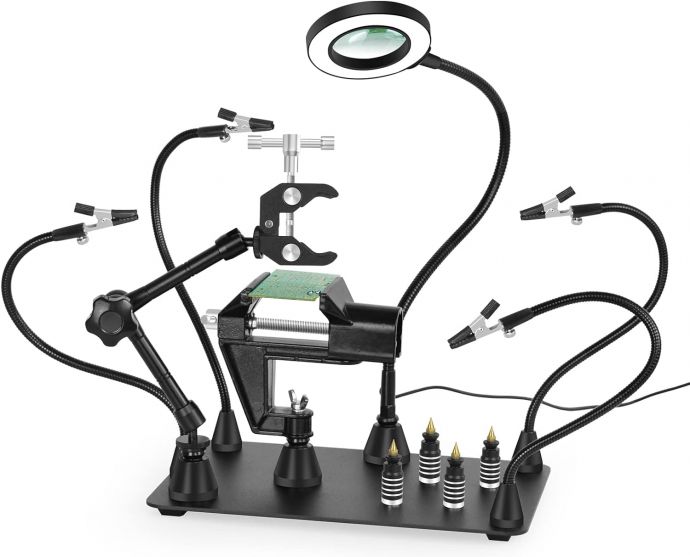
That’s where a dual-head super-stable ultra-grip magnetic third hand can be a game changer. This compact, bench-friendly tool is designed to lock your pieces in place with strong magnetic holding and flexible dual-headed control—so you can work with confidence on micro-scale tasks. Whether you’re troubleshooting a circuit board, assembling wearable tech, or crafting fine jewelry, the right third hand turns precision from a struggle into a workflow.
## Why a “Third Hand” Changes Everything
A third hand isn’t just a convenience—it’s an alignment and stability tool. When you’re working with small electronics or tiny jewelry components, you’re typically juggling three critical needs at once:
1. **Stability of the workpiece** (so you don’t tug, skid, or misalign)
2. **Freedom of the hands** (so soldering, gluing, or finishing is controlled)
3. **Visibility and positioning** (so you can see exactly where the work is happening)
Traditional bench setups often fall short because clamps can shift, parts can slip, and repositioning requires constant adjustment. A high-quality magnetic third hand solves these issues by offering a combination of strong magnetic retention and a design built for repeatable positioning.
## The Power of Dual-Head Design
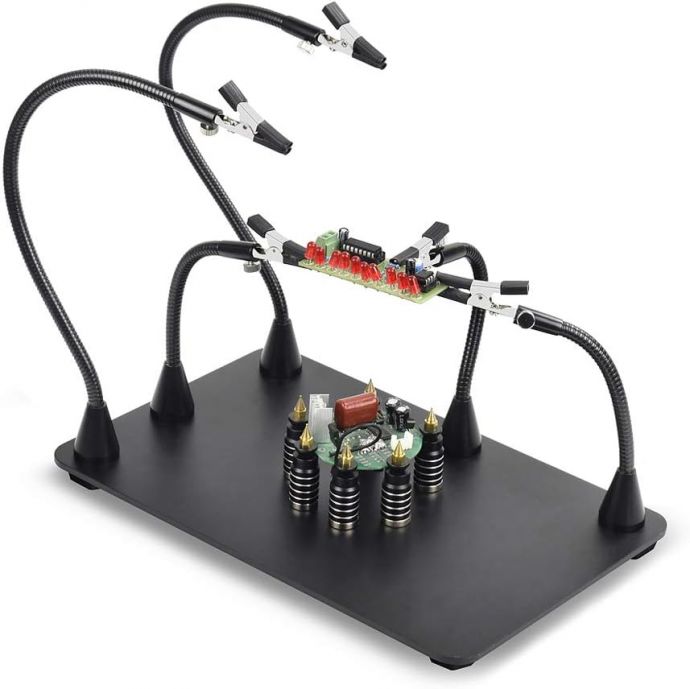
One of the most meaningful upgrades in modern third hands is the move from a single grip point to a **dual-head** configuration. Instead of relying on one clamp to hold everything, a dual-head setup lets you manage more complex work with less chaos.
### Better support for irregular or delicate parts
Small components rarely sit neatly. With two adjustable heads, you can stabilize items that are:
- flat but tiny (like SMD adapters or watch battery holders)
- irregular (like connectors and wire harnesses)
- curved or asymmetrical (like many jewelry settings)
The result is fewer moments where you “chase” the part while you work. More of your attention goes to the solder joint or the finishing pass.
### Cleaner soldering and reduced movement
Soldering is unforgiving. Heat changes tiny parts—metals expand, flux softens residue, and wire tension can pull components slightly out of position. Dual-head clamping helps keep the component steady while you apply heat and feed solder precisely.
Instead of holding the part with one hand and the solder with the other, you can stabilize the work with the heads and use your hands for the actual craft. You’ll often notice:
- less rework
- straighter, cleaner joints
- fewer accidental shorts or misaligned pins
### Easier wiring and assembly
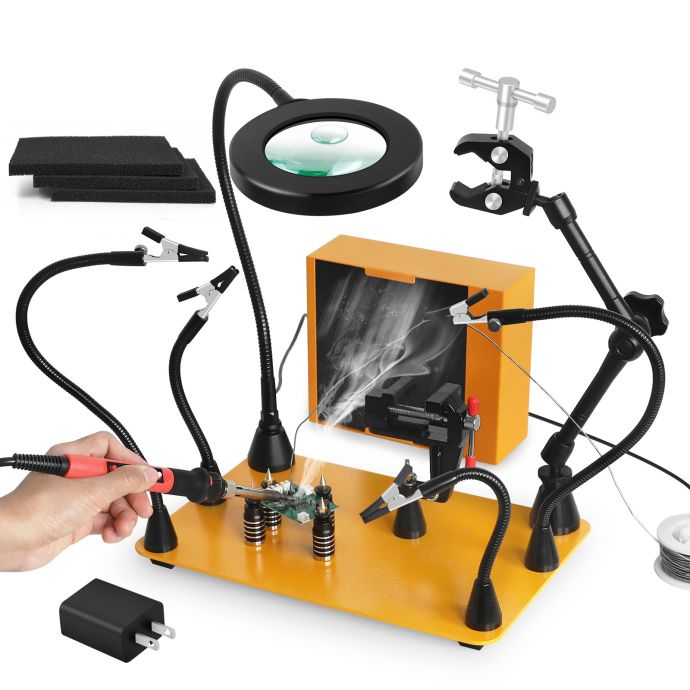
When you’re attaching leads, aligning connectors, or positioning small jump wires, you can use one head to hold the main piece and the other to support the wire itself. This is especially useful for:
- prototyping small gadgets
- repairing phone or camera modules (within hobbyist capability)
- replacing cable ends and making secure strain relief
- assembling earrings, clasps, or fine chain components
In short: dual-head control reduces the juggling act. You get more repeatability—meaning your work looks more consistent session to session.
## Super-Stable Base: The Difference Between Holding and Working
A third hand that grips well but wobbles is barely better than trying to balance tweezers in midair. Stability is what turns “it’s held” into “it’s held correctly.”
A **super-stable base** typically relies on a firm stand that resists tipping, plus an engineered balance so the tool doesn’t shift when you touch the work with a hot iron, a soldering tip, or a delicate metal tool. When stability is right, you benefit from:
- reduced vibration during fine adjustments
- consistent angles for soldering and glue alignment
- less “creep” when you press or manipulate parts
This matters in both electronics repair and jewelry crafting. If a clamp shifts by even a millimeter, the final outcome might not fit, contact, or sit correctly.
## Ultra-Grip Tips: Secure Hold Without Crushing
Grip strength is critical—but so is grip quality. Jewelry components and electronics parts are often made from materials that can be damaged by overly aggressive pressure.
A quality ultra-grip third hand uses tips designed to hold securely while minimizing the risk of:
- scratching surfaces
- bending pins or fragile tabs
- marring fine metals or painted components
Depending on the model, these grips may feature textured contact surfaces that improve friction, helping the piece stay put even if you’re working at an angle. In practice, this means you can reposition a wire or component slightly without it sliding out of place immediately.
### Protection for sensitive work
For jewelry crafting, many parts are delicate by nature: small prongs, thin wires, soft metals, and polished surfaces. Secure gripping that preserves your finish helps you avoid time-consuming rework and keeps your pieces looking professional.
For electronics, stable grip also protects delicate connectors and fragile components, especially when you’re aligning leads or securing tiny terminals.
## Magnetic Strength: Fast Setup, Confident Positioning
Magnet-based holding is popular for a reason: it allows quick placement and reliable stability when positioned correctly. A strong magnetic system can create consistent friction and retention, letting you:
- attach the third hand to a ferrous work surface
- reposition quickly without complex clamp tightening
- keep your hands free without constantly rechecking alignment
This speed is more than a convenience—especially for hobbyists and small-batch makers. When you can set up in seconds, you can spend more time producing and less time preparing.
Magnetic holding also helps for tasks where the workpiece or surrounding tooling changes frequently. If you’re moving between soldering, testing, or polishing, the ability to quickly reset your position streamlines your workflow.
## Transforming Small Electronics Repair
If you work on small electronics—controllers, sensors, cable assemblies, or repair projects—the dual-head super-stable magnetic third hand supports a wide range of tasks. Here are the moments where it shines most:
### 1) Replacing wires and connectors
You often need one hand to hold the wire, one hand to solder, and a third element to stabilize the connector or pad. Dual heads can hold the connector while your hands manage solder and heat. The magnetic base keeps the whole setup from shifting when you apply force.
### 2) Soldering fine leads and jumper wires
Fine wire is prone to moving due to tension. With dual-head grips, you can clamp the wire in a controlled position and feed solder more precisely. That reduces the risk of cold joints and improves mechanical strength.
### 3) Handling small PCBs and modules
Small circuit boards can warp or shift when heated. A stable, gripped support gives you a predictable working plane. You can keep the board oriented and reduce the chance of pads lifting or components drifting.
### 4) Working near sensitive parts
Precision tools matter because not all electronics parts tolerate repeated contact. A third hand helps you work efficiently—get the solder in place without excessive hovering that can overheat surrounding components.
## Elevating Jewelry Crafting Precision
Jewelry work is incredibly detail-oriented. Whether you’re soldering rings, repairing chain links, forming wire components, or setting tiny elements, stability is everything. A magnetic third hand supports jewelry making in practical ways:
### 1) Soldering small joints
Soldering jewelry is not just about heat; it’s about positioning. Small gaps and misalignment can ruin a piece. With dual heads and secure grips, you can stabilize the two sides that need to meet—then solder with far more accuracy.
### 2) Holding chain segments and clasps
Chain repair often requires aligning tiny rings or connecting hardware in tight spaces. A dual-head setup lets you hold the main segment while supporting the part that must slide into place, helping prevent twisting or stretching.
### 3) Forming and bending fine wire
Even when you’re not soldering, holding matters. For example, when shaping wire components, you want consistent tension and positioning. A stable holder reduces accidental slips and makes your results more repeatable.
### 4) Protecting finishes during assembly
Jewelry surfaces scratch easily. Ultra-grip tips that maintain hold without excessive pressure help preserve shine. That means less polishing later—and a cleaner look right after assembly.
## Ergonomics and Workflow: Less Fatigue, Better Results
A top-quality third hand isn’t just about holding; it’s about working comfortably. The dual-head setup encourages a workflow where:
- you set the position once,
- you maintain visibility,
- you work with both hands fully dedicated to the task.
That reduces micro-adjustments during sensitive operations. Over time, fewer repositioning moments translate to less frustration and less fatigue—particularly during longer soldering sessions or detailed jewelry builds.
## Choosing the Right Third Hand for Your Bench
Not all third hands are built the same. When looking at a dual-head super-stable ultra-grip magnetic model, consider what matters most for your work:
- **Stability of the base:** Does it resist wobbling when you apply pressure?
- **Grip quality:** Are the contact points textured or designed to prevent slipping without damaging parts?
- **Dual-head adjustability:** Can you position both heads where you need them quickly and precisely?
- **Magnetic strength:** Will it hold confidently on your work surface?
- **Use-case fit:** Do the grips suit both electronics parts (wires, pins, small PCBs) and jewelry pieces (thin metals, settings)?
If you do both electronics repair and jewelry crafting, prioritizing versatility pays off. A dual-head design is especially valuable because it supports a broader range