When you think about electronics repair or hands-on DIY projects, you might picture intricate wiring, careful solder joints, and the steady calm of a tool in your hands. But anyone who has spent hours trying to hold multiple components at once knows the real challenge is often not the soldering itself—it’s the lack of hands. Solder flows where it’s needed only when parts stay perfectly positioned. Wires shift, PCBs flex, leads spring away, and suddenly precision becomes a game of juggling.
That’s where an upgraded “third hand” workstation can change everything. The Magnetic Helping Hands Third Hand Work Station—especially one built with an extra-large design for stability and versatility—moves soldering from a struggle into a controlled, repeatable process. It redefines what a benchtop assistance tool can do by combining stronger holding power, broader reach, and a layout designed to handle real-world repair tasks without constantly reconfiguring your setup.
Below, we’ll explore what makes this kind of workstation stand out, why extra-large matters, and how it can improve outcomes across electronics repair and DIY electronics.
---
## Why “Holding” Is the Hidden Difficulty in Soldering
Most soldering frustrations aren’t about the iron temperature or the flux choice. They happen because of physics and timing:
- **Parts want to move** before solder is molten and anchored.
- **Small components** can drift, rotate, or lift when you reposition your iron.
- **Flexible wires** shift under their own tension.
- **Two-handed work** becomes impossible when you also need a third (to stabilize) and sometimes a fourth (to apply flux or hold a wire while heating a joint).
Even experienced technicians run into this when working on cramped areas like circuit boards, small connectors, or wiring harnesses. A typical bench tool like a basic helping hands helps—but many are limited in reach, clamping strength, or rigidity. Add heat, leverage, and awkward angles, and “helping” can quickly turn into “fighting.”
---
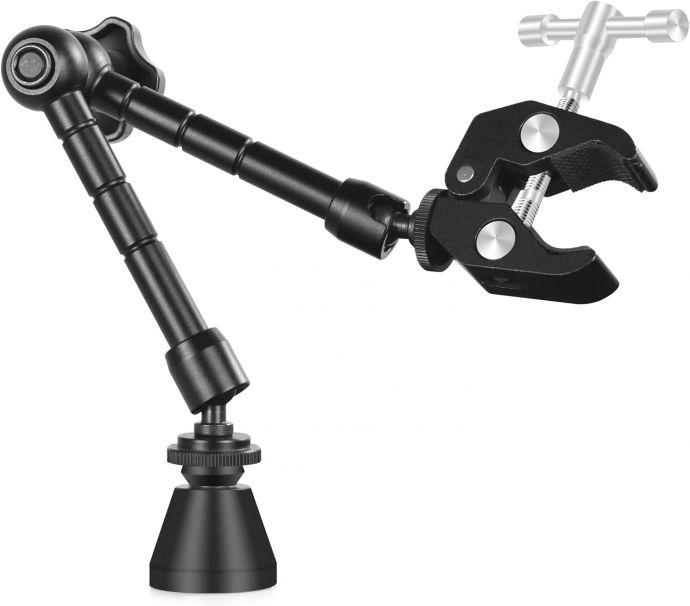
## What Makes a Magnetic Third Hand Workstation Different
A magnetic helping hands third hand work station is designed around one principle: **stability that you can trust**. Traditional stands rely on mechanical clamps and fixed arms. They’re helpful, but their effectiveness depends on how well you can position everything and how much force the clamp can resist once heat is applied.
A magnetic system brings extra holding capability that can keep components stable during critical moments—particularly when you need:
- hands-free positioning while soldering,
- quick repositioning between steps,
- firm placement of metal parts, leads, brackets, or jig-compatible pieces,
- stronger control without constant retightening.
Magnets also allow for a more flexible workflow. Instead of rebuilding your setup for every project phase, you can often reconfigure the workstation more efficiently. That matters when repairing electronics is iterative: one problem reveals another once you remove a connector, replace a component, or inspect a joint.
---
## The Case for an Extra-Large Design: More Than Just “Bigger”
An extra-large helping hands workstation isn’t about showy size—it’s about practical engineering. In soldering and electronics repair, workspace constraints have a real cost: more repositioning, less visibility, and greater risk of accidental damage.
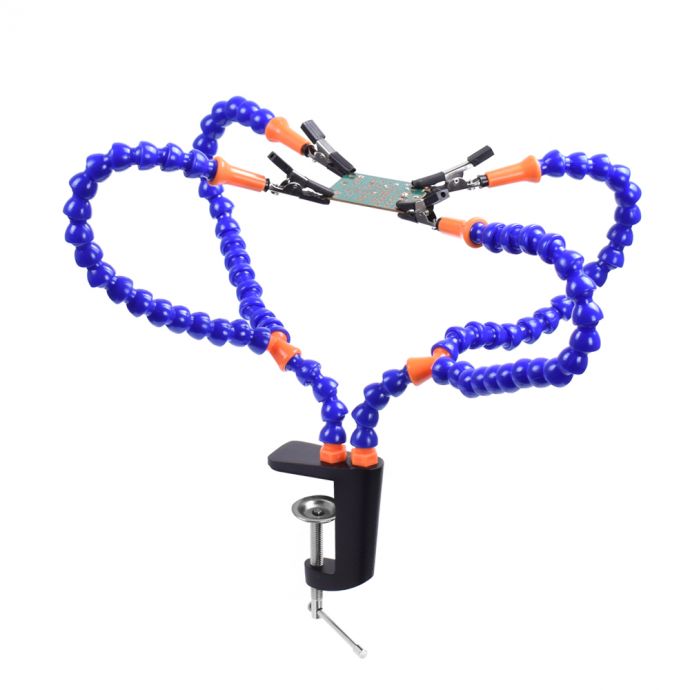
Here are the main reasons extra-large matters:
### 1) Stability Across Larger Boards and Layouts
Small clip-based holders can wobble when you’re working on heavier PCBs, larger adapter boards, or harness assemblies. An extra-large base and broader arm coverage usually increase rigidity, reducing micro-movements that can lead to cold joints or misalignment.
### 2) Better Reach and Angle Control
Electronics don’t all sit neatly in the same orientation. Larger workstations provide more flexibility in arm placement so you can:
- access solder points from different angles,
- position wires without tension,
- clamp components where they’re actually located on the board, not where the stand can conveniently reach.
### 3) More Room for Tools and Workflow
When soldering, you need space for flux, solder wire, tweezers, and sometimes a magnifier. A larger working platform gives you more practical room to operate, organize, and avoid clutter. Less clutter means fewer mistakes.
### 4) Versatility for DIY Builds and Repairs
Electronics repair isn’t limited to one type of job. You might be reworking through-hole joints, soldering wires to a connector, attaching leads to a circuit board, or building a prototype from scratch. An extra-large station can adapt more readily to different component sizes, arrangements, and assembly styles.
---
## Precision Starts With Positioning
Precision soldering is essentially positioning plus heat control. Even the best soldering iron can’t compensate for a part that’s slightly off.
A magnetic helping hands workstation supports precision by giving you:
- **repeatable placement** of components and wire ends,
- **consistent angles** for applying solder and heating the pad,
- **hands-free stabilization** so you can focus on technique rather than holding.
This matters most when soldering through-hole components, surface-mount leads, or small connectors where contact must be clean and alignment must stay true during heating.
When the workstation holds firmly, you can adopt a more methodical soldering rhythm:
1. Bring the component into position.
2. Confirm the lead alignment and contact point.
3. Secure with arms and magnetic support.
4. Apply flux.
5. Heat and feed solder with controlled timing.
6. Inspect and adjust only if needed.
Instead of fighting for a momentary position, you build a steady setup that stays reliable throughout the joint.
---
## Where This Workstation Excels in Electronics Repair
If you repair electronics regularly—whether for hobby work, refurbishing gadgets, or troubleshooting devices—the work often involves repeat tasks under time pressure. A third hand workstation becomes most valuable in scenarios like these:
### Replacing Connectors and Headers
Connectors are notorious for being hard to hold square while soldering multiple pins. An extra-large, stable workstation helps clamp the connector body, keep pins aligned, and prevent pin rotation or board lift.
### Soldering Wires to Pads or Off-Board Components
When wiring to a PCB or attaching leads to a module, you need the wire to remain aligned while the pad and wire heat together. A third hand reduces strain on the joint and helps prevent wires from pulling away while solder solidifies.
### Repairing Damaged Through-Hole Joints
Through-hole repairs can be tricky because you’re working deeper and sometimes must remove old solder. Stability helps you heat the joint and wick or reflow without constantly re-centering the component or lead.
### Working With Small, Fragile, or Springy Parts
Some components resist holding: springs, thin leads, or parts that “want” to spring back after placement. Magnetic support and strong clamping can reduce that problem and make it easier to keep contact until solder sets.
---
## The DIY Advantage: From Prototyping to Permanent Builds
Soldering isn’t only about fixing broken gear—it’s also how you build. Prototypes often require repeated rework: undo a wire, move a component, change a connector, then solder again.
A magnetic helping hands workstation supports this DIY cycle by improving:
- **setup speed** when changes are frequent,
- **consistency** between build iterations,
- **comfort** during longer sessions thanks to a stable platform,
- **confidence** that solder joints won’t be compromised by shifting parts.
With a well-designed station, DIY electronics stops feeling like a stressful bottleneck and starts feeling like a workflow you can trust.
---
## Better Ergonomics, Fewer Mistakes
Even if you’re using good soldering technique, fatigue can increase mistakes. Holding components by hand or constantly adjusting your stance can lead to:
- uneven heat application,
- accidental shorts from drifting wires,
- bumped components,
- misaligned solder joints.
A stable third hand workstation changes your posture from “grip and control” to “position and monitor.” You can keep your focus on the joint, not on maintaining grip strength or compensating for shifting parts.
That matters when you’re soldering for 30 minutes—then again for another 30 minutes—and you want your quality to stay consistent throughout.
---
## Versatility Beyond Solder: A Practical Benchtop Companion
While soldering is the headline use case, a magnetic helping hands third hand workstation also supports many related tasks:
- holding parts while inspecting,
- aligning components before soldering,
- bending and pre-positioning leads,
- testing and quick trial fitting,
- organizing assemblies during multi-step builds.
A reliable bench setup reduces friction in every stage, not just the soldering stage. You’re building a smoother process overall, and that’s often what distinguishes a “fine” project from a professional-looking result.
---
## Choosing the Right Workstation Features
Not all helping hands are equal, and it’s worth considering what features actually affect performance. Look for a third hand work station that offers:
- **a rigid base** that resists wobble,
- **strong holding capability** (magnets and clamps working together),
- **extra-large or extended footprint** for flexible layout,
- **adjustable arms** with controlled movement,
- **versatile reach** for different PCB sizes and component layouts,
- **a stable work area** for tools and inspection.
The extra-large magnetic version stands out because it targets the most common constraints: limited working space and limited stability under real pressure from soldering forces.
---
## Getting the Most Out of Your Third Hand Setup
Even the best station won’t replace good soldering fundamentals. To get excellent results consistently, pair your workstation with disciplined technique:
- **Use flux correctly**: a clean joint plus good flux flow improves reliability.
- **Pre-tin when appropriate**: helps joints wet quickly and reduces dwell time.
- **Heat the joint, not the solder alone**: ensures the entire contact area reaches temperature.
- **Hold steady during reflow**: even a brief shift when solder transitions can create a