In the world of electronics repair, assembly, and prototyping, few tools have had as dramatic an impact as the "helping hands" stand—a now-iconic device that has given generations of hobbyists, students, and technicians the crucial extra set of hands needed to manipulate tiny wires and components. Yet, as electronics have evolved to become both more delicate and more complex, the limitations of traditional helping hands have become increasingly apparent. Enter the Magnetic Helping Hands Third Arm with its extra-large design—a novel innovation that is rapidly becoming the centerpiece of the modern soldering station, setting new benchmarks for stability, precision, and versatility.
## The Challenge of Modern Electronics Work
The process of soldering and assembling electronic circuits is a ballet of dexterity, focus, and patience. Soldering pins on microchips, guides for ribbon cables, fine-pitch connectors, and intricate surface-mount components all require a helping hand—sometimes more than just two. Enthusiasts and professionals know the frustration of trying to manipulate multiple wires, hold a PCB steady, and position a soldering iron with only two human hands at their disposal.
Traditional helping hands—those familiar stands with alligator clips and a magnifying glass—offered a partial solution. Yet they have their own shortcomings: they’re often small and prone to tipping, their joints can become loose over time, and the alligator clips can’t always grip delicate or oddly shaped objects without damage. As projects grow in complexity and components become even more minute, the need for a more adaptable, stable, and precise tool becomes undeniable.
## Rethinking Helping Hands: The Third Arm Concept
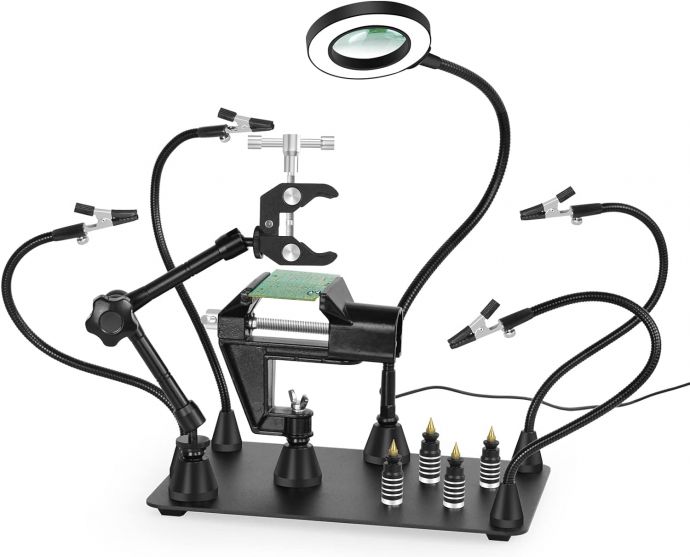
Recognizing these needs, designers and engineers have begun reimagining what helping hands can be. The Magnetic Helping Hands Third Arm is a direct response to the limitations of old designs, leveraging the strength and flexibility of modern materials and the ingenuity of magnetism. The "third arm" concept is straightforward: provide users with an adjustable, stable, and non-intrusive way to hold items securely—far beyond what the simple alligator clip on a metal rod can offer.
The most distinguishing feature of this new generation of "third arm" helping hands is their extra-large base, which is often crafted from solid steel or a heavy aluminum alloy. This base is both wide and heavy enough to stay perfectly rooted in place, even when supporting and exerting force on larger circuit boards, chunky connectors, or when several flexible arms are engaged simultaneously. No more frustrating tipping over or skittering across the workbench mid-project.
## The Power of Magnets: A Revolution in Modularity and Security
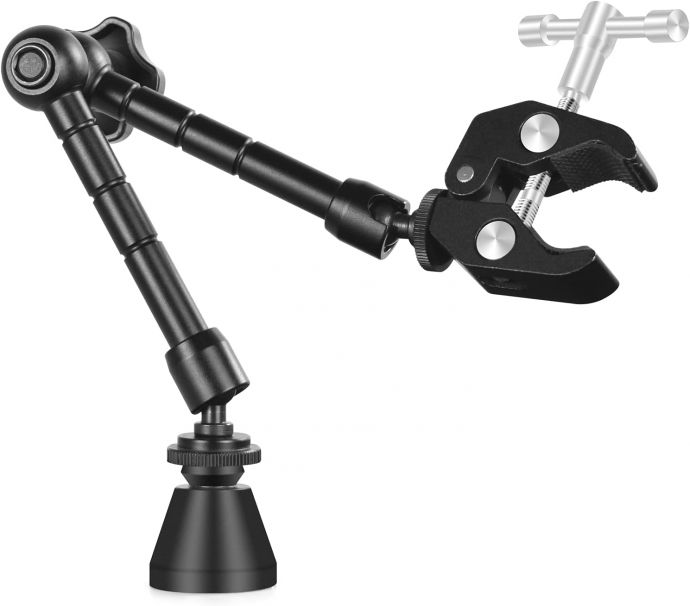
Magnetism lies at the heart of this revolution. Instead of relying on fixed, fiddly mechanical joints, the flexible arms of the new helping hands are often equipped with powerful rare-earth (NdFeB) magnets at their bases, allowing them to be repositioned anywhere on the metallic base plate. This feature opens up a universe of possibilities: arms can be strategically placed to hold items exactly where needed, supporting PCBs from underneath, gripping connectors at awkward angles, or stabilizing heat sinks during soldering. When more arms are needed, users can simply add them—no screws, no complex assembly, just the elegant click of a magnet snapping into place.
Magnetic arms also mean quick teardown and minimal clutter: the arms can be removed instantly for storage or adjustment, and the base is left as a clean, unobtrusive work surface. This modular philosophy extends even to the tool tips themselves—no longer just alligator clips, but a variety of attachments, including soft silicone grippers for delicate components, precision clamps for micro-connectors, and even small platforms for supporting magnifying glasses or lighting.
## Extra-Large Design: Why Size and Stability Matter
The "extra-large" descriptor is not just marketing hype—it’s a critical advantage. The increased surface area and mass of the base give the tool unmatched stability, supporting large and clumsy PCBs, batteries, project boxes, and more. For technicians repairing complex desktop motherboards or hobbyists assembling large sensor arrays, the difference is immediate and profound: gone are the days of makeshift supports, tape, or piles of solder spools to prop up a project.
A larger base also allows for more arms to be attached and spaced out appropriately, essential for stabilizing projects with multiple areas of focus. For those working on robotics or multi-board assemblies, the ability to have three, four, or even six flexible arms holding different parts in precise alignment is a transformative experience.
## Precision at Your Fingertips
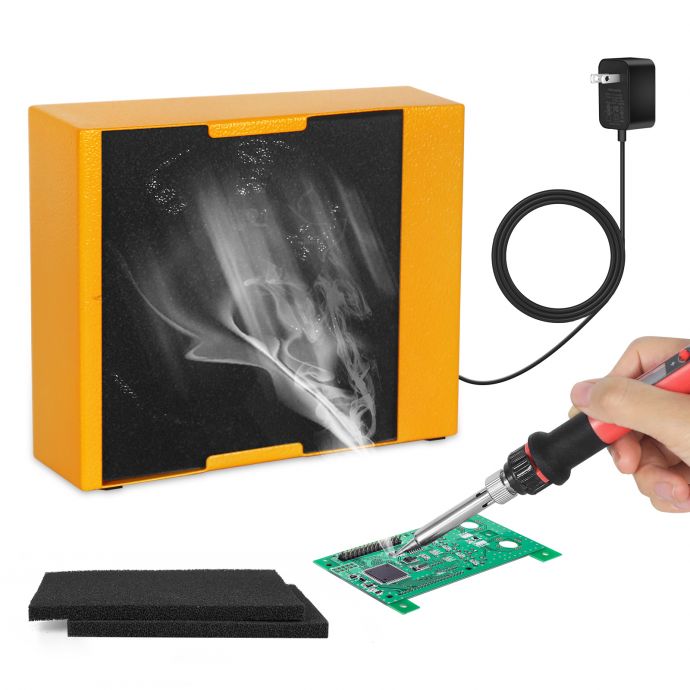
Soldering requires not just holding things still, but placing components at exact positions and angles. The Magnetic Helping Hands Third Arm excels here, with its flexible but firm gooseneck arms that maintain their shape under load and allow micro-adjustments. Each movement can be dialed in with fingertip control, giving users the ability to precisely position a wire or chip before fixing it in place with a tiny dab of solder.
Because the magnetic arms can be reconfigured instantly and lock firmly where they're needed, they support a style of working that’s dynamic and iterative. Projects can be rotated, flipped, or reoriented on the fly without having to completely rebuild the support setup. This means more time spent working and less on preparation and adjustment.
## Unleashing Creativity and Efficiency
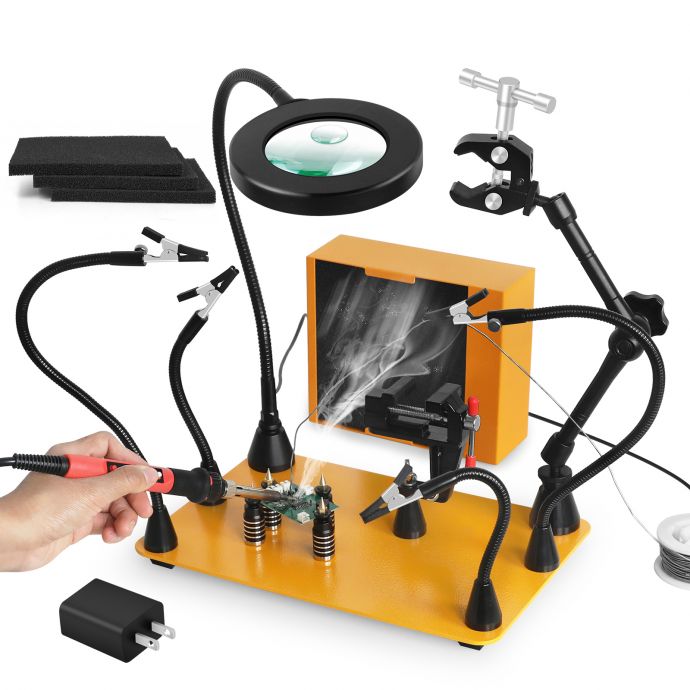
For makers, inventors, and engineers who thrive on experimentation, the Magnetic Helping Hands Third Arm opens new doors. Custom jigs, test harnesses, or even entire prototyping rigs can be built simply by arranging the arms and attachments as needed. Circuit boards can be supported for soldering on both sides, intricate wiring harnesses can be held at the perfect angle for heat-shrink tubing or crimping, and even 3D printer hotend repairs are made easier by the ability to support multiple parts simultaneously.
For professionals, the time saved quickly translates into higher productivity and lower stress. Technicians working on repairs, modifications, or diagnostics can count on their workpiece being perfectly stabilized, minimizing errors and rework. The extra-large platform also means the station can double as a mini-workbench, supporting tools, meters, and extra lighting—all held conveniently by magnetic arms positioned exactly where they’re needed.
## Safety and Durability: Built for a Lifetime of Use
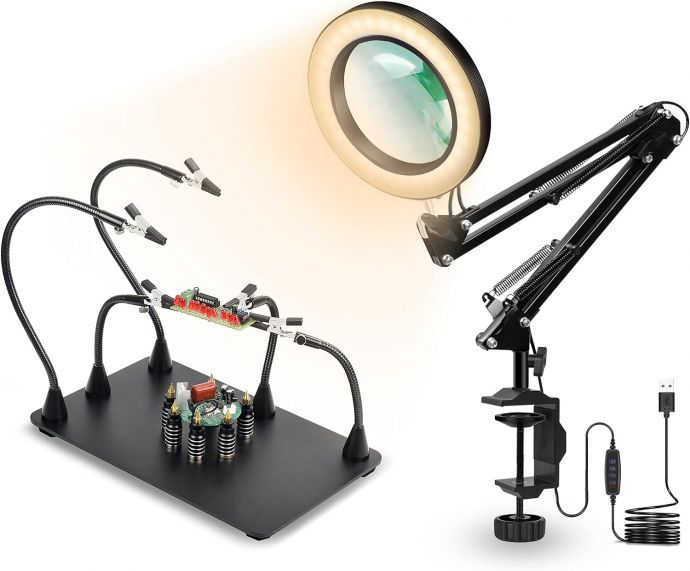
Traditional helping hands are infamous for their instability and tendency to wear out (loosened joints, failed clamps, weak springs). In contrast, the magnetic third arm units are engineered for robust, daily use. Their steel or aluminum bases are powder-coated or anodized to resist corrosion and chipped solder, while the magnetic arms themselves are designed to withstand thousands of repositionings with no loss of holding power.
For users concerned with static electricity—a real hazard in modern electronics—many premium models incorporate ESD-safe materials or grounding eyelets, making them suitable for use in sensitive environments.
And because the system is modular, it’s easy to replace or upgrade individual components (magnets, grippers, arm segments) as needs evolve or new attachments are released, ensuring the tool will remain as useful in ten years as it is today.
## Who Benefits Most?
The beauty of the Magnetic Helping Hands Third Arm is its universal appeal. Novices, students, and casual tinkerers value the freedom from frustration and the ability to focus on learning and creating, rather than struggling with makeshift supports. Experienced makers and repair shops see a tangible boost in precision and speed, making even complex assemblies feel routine.
Educational settings benefit enormously, with fewer damaged components and a safer, more engaging hands-on experience for students. In manufacturing, assembly, and quality control, the platform streamlines workflows, reduces errors, and supports lean, flexible production lines—especially where high-mix, low-volume runs demand rapid setup and teardown.
## Looking Forward: The Future of Workbench Innovation
The evolution of the helping hands from a simple dual-clip stand to a magnetic, modular, and scalable third arm reflects the broader shift in electronics from improvisation to precision. As electronics continue to shrink and diversify, the demands on technicians and makers will only increase, and the tools they rely on must keep pace.
Many industry insiders predict that future iterations of the third arm design will incorporate even more advanced features: integrated lighting, data logging (to monitor heat or pressure during delicate repairs), or even robotic articulation for automated assembly. What is clear is that the flexibility, stability, and ease of use delivered by the extra-large, magnetic helping hands third arm is now the gold standard for the modern soldering station.
## Conclusion: A Tool That Extends Human Ingenuity
In the quest to build, repair, and innovate in electronics, human hands—no matter how skillful—have always faced limits. The Magnetic Helping Hands Third Arm doesn’t just offer a solution; it represents a leap forward, empowering a new level of creativity, precision, and productivity. Its extra-large design and magnetic modularity provide unprecedented stability and adaptability, changing the way electronics enthusiasts and technicians approach their craft. In doing so, it moves the workbench experience, quite literally, beyond human reach.